Showing posts with label ireland. Show all posts

Sunday, December 06, 2009

Another Liam Clancy obit (NYT)


NYT
[Columbia]

December 5, 2009
Liam Clancy, Last of the Folk Group, Dies at 74
By BRUCE WEBER

Liam Clancy, an Irish troubadour and the last surviving member of the singing Clancy Brothers, who found fame in the United States and helped spread the popularity of Irish folk music around the world, died on Thursday in Cork, Ireland. He was 74.

His death was announced by his family and reported on the Web site www.liamclancy.com. He had been treated for pulmonary fibrosis, a lung disease, The Associated Press reported.

Wearing white Aran sweaters, the Clancy Brothers, joined by a fellow Irishman, Tommy Makem, won fans with musicality, sentimentality and irreverence, not unlike the Smothers Brothers a few years later, though without their penchant for patter.

Both authentic Irish and expatriate Irish, they were cultural crossovers, and, for a while, celebrities. When they were criticized, it was as the epitome of staged Irishness, as a documentary about Liam Clancy put it.

Mr. Clancy played guitar, sang in a bell-clear baritone, wore a friendly, slightly roguish expression and exuded a humorous world-weariness that made him beloved by his countrymen as quintessentially Irish. But he and his musical clan made their name in America.

It was in 1956 that Mr. Clancy, then 20 or 21 and intending to be an actor, immigrated to the United States, joining two of his older brothers, Tom and Paddy, in New York. He achieved some success as an actor; he and Tom starred as prison guards in a well-received stage dramatization of the Frank O’Connor story “The Guests of the Nation,” and he appeared on Broadway in a short-lived production of James Costigan’s “Little Moon of Alban.”

In the meantime, the brothers and Mr. Makem, a friend of Liam’s who had also immigrated, began singing together, performing rowdy and sentimental Irish folk tunes at clubs and fund-raisers and developing a local following. They recorded on a label established by Paddy Clancy, and in the early 1960s, billed as the Clancy Brothers and Tommy Makem, they made a career-changing appearance on “The Ed Sullivan Show.” They soon found themselves in the midst of the folk music revolution, touring and recording several albums.

Liam Clancy lived in Greenwich Village, where he befriended another young folk singer, Bob Dylan. They dated a pair of sisters, Mr. Clancy told interviewers. Recalling that time in an interview on Irish television two years ago, Mr. Clancy said that he, a Roman Catholic from rural Ireland, and Mr. Dylan, a Jew from a small Minnesota town, shared an important quality.

“People who were trying to escape repressed backgrounds, like mine and Bob Dylan’s, were congregating in Greenwich Village,” he said. “It was a place you could be yourself, where you could get away from the directives of the people who went before you, people who you loved but who you knew had blinkers on.”

Mr. Dylan told an interviewer in 1984: “I never heard a singer as good as Liam ever. He was just the best ballad singer I’d ever heard in my life. Still is, probably.”

....

read the rest HERE

Saturday, December 05, 2009

Liam Clancy, last of the Clancy Brothers, dies at 74

MSNBC/AP

Irish folk pioneer Liam Clancy dies at 74
He was last member of Clancy Brothers, which took U.S. by storm in ’60s

updated 1:38 p.m. PT, Fri., Dec . 4, 2009

DUBLIN - Irish balladeer Liam Clancy, last of the Clancy Brothers troupe whose feisty, boozy songs of old Ireland struck a sentimental chord worldwide, died Friday in a Cork hospital. He was 74.

Clancy died in his hospital bed flanked by his wife Kim and daughters Siobhan and Fiona, his manager and family said. He suffered for years against incurable pulmonary fibrosis, the same lung-destroying disease that claimed one of his older singing brothers, Bobby, in 2002.

Ireland's arts minister, Martin Cullen, led nationwide tributes to Clancy, praising his "superb singing, warm voice and gift for communicating in a unique storytelling style."

"It was always so obvious with Liam Clancy that he loved what he was doing and his very presence made you feel welcome," Cullen said.

Clancy, the youngest of 11 children in a County Tipperary household filled with folklore and song, emigrated to the U.S. in 1956 to join two elder brothers, Tom and Patrick, in New York City who were singing on the side as they pursued budding careers as Broadway actors.

But after recording a 1956 album of Irish rebel songs, they grew a New York following as musicians and formed a partnership with Northern Ireland immigrant Tommy Makem. Soon they were earning more as weekend singers in Manhattan bars and clubs than as full-time stage actors.

Scouts for U.S. television's flagship “Ed Sullivan Show” spotted them performing in Greenwich Village's White Horse Tavern, and their 16-minute appearance in March 1961 on the program — extended because of the last-minute cancellation of another act — turned them into an Irish-American folk phenomenon.

Their agent cultivated a schmaltzy appeal to Irish emigrants worldwide, encouraging the Clancy Brothers and Makem to perform in cream-white Aran wool sweaters hand-knit from home as well as tweed fishermen's caps.

But their up-tempo resurrection of traditionally slow, sad Irish songs made a deeper impression on much of America's emerging folk artist movement, including Bob Dylan, who paid tribute to Liam Clancy as "the best ballad singer I'd ever heard in my life."

The Clancy Brothers and Tommy Makem performed Carnegie Hall, toured Ireland, Britain, Australia and repeatedly throughout the U.S., and recorded more than a dozen albums before breaking up amid arguments over bills, babes and booze in 1974.

....

read the rest HERE

Monday, May 19, 2008

NYT Travel: Does the ‘Real’ Ireland Still Exist?

New York Times Travel
May 18, 2008
Does the ‘Real’ Ireland Still Exist?
By DAN BARRY

AN August night in the sea-scented village of Kinvara finds us at Connolly’s, a pub so permanent that if some codger were to tell you it was here before Galway Bay, lapping now just outside the door, you’d nod and buy him a pint. My wife and I are hunched at a small table with friends when a smiling woman in a peasant skirt sits beside us, carrying a perfectly appropriate accessory in this corner of Ireland — a button accordion.

She is Mary Staunton, a musician known throughout the Irish west. When the inevitable call goes out, she obliges, her fingers skipping across the buttons like children playing frantic but sure-footed hopscotch. Then a white-haired man mentions an old song from his childhood. Does she know it? Why yes, she does, and when her fingers finish their dance, leaving the man smiling, there suddenly rises from across the room the hesitant but clear voice of a young woman who has summoned the nerve to sing. (“And I said let grief be a fallen leaf/At the dawning of the day.”) As she sings, all talking stops: an entire pub, transported. And I think to myself, now this would never happen where I’m from.

Was this the real Ireland? Or was it a rare dash of magic, sprinkled into Connolly’s to validate an antiquated sense of Ireland — a sense rooted in the days when economic inequity between two countries allowed American tourists to spend as though Ireland were one sprawling duty-free shop? Though the country is now experiencing some economic uneasiness, you still cannot help but think: How times have changed.

Over the years, I have spent a lot of time in the western counties of Galway and Clare, and if nothing else, this is what I have gleaned: Ireland can be that place you missed as you traveled around Ireland, looking for Ireland.

Yes, you can find a thatched cottage here and there, if you try. Yes, you may even encounter a white clot of sheep blocking your rented car’s path, raising from musty memory some postcard caption about Irish Rush Hour. But to wander about, looking to bag with a digital camera some approximation of a time-faded Irish postcard, is to miss the complexities of a country that is thoroughly enjoying its wealth and adapting to its European Union membership while at the same time trying to preserve its dreamlike landscape and proud cultural heritage.

You may indeed hear a young Irish woman suddenly break into song in Kinvara. But you may also walk around the corner and be served dinner by a young man with an Eastern European accent instead of a brogue. Travel 10 miles up the road to Gort and you might wade into a celebration of Brazilian culture, staged by a transplanted community that is now an integral part of that old market town.

There you have it: delightful, post-millennial Ireland.

Well versed by now in the lesson that to search for Ireland is to miss it, my family and I once again settled into a self-catered apartment in Kinvara, a village cleaved to Galway Bay near the Clare-Galway border. A generation ago, even a decade ago, you might have called it an unhurried place; now Kinvara captures the transformation of Ireland in so many ways.

The village has a few narrow streets, some shops and pubs, and a stone-walled pier more than 200 years old, from which the distant lights of Galway City can be seen at night and the inhalations and exhalations of the sea can be measured. Across from the pier there looms Dunguaire Castle, which for nearly five centuries has stood on grounds near the ancient fort of Guaire, seventh-century King of Connaught.

The castle’s topmost open windows offer a panoramic view of a Kinvara in flux. Much of the surrounding farmland is being subdivided for new homes, some of them being offered for the equivalent of $1 million and more; they appeal to young professionals looking for an easy commute into Galway, and to affluent Dubliners seeking a second-home getaway. It all leaves one wondering whether the village’s aesthetics are at risk; whether these new developments, and the taxing of the fragile infrastructure they represent, will make Kinvara less — Kinvara-like.

But for now, Kinvara presents curious juxtapositions of the old and the new. Here, for example, an inviting place called the Burren Beo Café occupies an old stone storefront where wireless access is available and where tombstones from a long-gone churchyard adorn the patio. You can sip your caffè latte and imagine the life led by one Bryan Daly, who departed this life at the age of 33, in 1816, and whose headstone lies flat at your feet.

THOUGH Kinvara is perfectly situated for day trips to other points of the Irish west, I often struggle with whether to stay or to go, lulled as I am by the mundane daily rhythms of a village I have come to know in all seasons.

In the mornings, I watch the same white-bearded fisherman — said to be Kinvara’s last — park his old black bicycle by the pier, row a skiff to his rusty-green vessel, and disappear into the bay. Sometime later I see him rowing back to shore, where he mounts his bicycle and vanishes down a narrow lane, leaving me to wonder whether I had actually seen him or simply imagined him.

In the afternoons, I sometimes see the beer truck pull up to Connolly’s, and I watch the deliveryman throw a seat cushion on the ground, bounce the beer kegs precisely onto the cushion, then spin them like squat and silvery dance partners toward the pub door.

And in the evenings, I take walks with my wife and two young daughters along a worn path that meanders along the shoreline and through pastures where cows, horses and donkeys approach, as if seeking the latest gossip from Connolly’s. At the stony pier we watch the bobbing of moored Galway hookers, traditional wooden sailing boats with single masts and glorious billowing sails. Once used to import turf from rocky Connemara, the hookers are now the star attraction of a mid-August festival called Cruinniu na mBad, or Gathering of the Boats.

The sun drops, and somewhere voices are raised in song, seducing you to stay snug in Kinvara. But other places beckon, places dotted through the west that represent the old, the new, the real Ireland. If you were to climb again up those stone steps of Dunguaire Castle and peer again through one of those narrow windows, you would see beyond the village a limestone moonscape of hills and crevices, of wild goats and wildflowers, that stretches for more than 100 square miles across North Clare. This is the Burren.

Take any crooked Burren road, whether to Kilfenora or to Lisdoonvarna, to Tubber or to Cassidy’s Pub, and something ancient — a solitary Celtic cross, a crumbled farmhouse, one of the megalithic tombs of stone called dolmens — presents itself. One rain-swept afternoon, friends led us to a Burren mountain called Slieve Carron, which stretches across the horizon like a giant in repose. We donned slickers and walked a mile across cow-pocked fields, through some brush, up a muddy hill, to a tree-canopied pocket as lush as any hobbit’s grotto. Here was an altar made of rock slab beside a spring. And here, deeper in, was a cave where St. Colman MacDuagh is said to have lived and meditated. No beeping of backhoes clearing way for another luxury home; just the beating of rain against leaves.

This sense of exposure, even oneness, with sky, rock and water continues through the short, winding drive from Slieve Carron to New Quay. Found there is a semi-secret place called the Flaggy Shore, a stony stretch along Galway Bay that is alive with lime-green seaweed and bruised-purple algae, with tidal pools and breath-catching winds, with — well, best to step aside and let the unmatchable Seamus Heaney describe the Flaggy Shore experience in his poem “Postscript”:

... You are neither here nor there,

A hurry through which known and strange things pass

As big soft buffetings come at the car sideways

And catch the heart off guard and blow it open.

Half a mile away, at the back door of Linnane’s Lobster Bar, fishing boats rock in the impatient tide; at its front door, two rumpled regulars sit on upturned kegs, offering nods and how-are-ye’s. Between these portals, fine fish and chowder are served. But on this day, and on a patch of pasture just outside Linnane’s and beyond a stone wall, there sit two sleek private helicopters, so out of place in these simple surroundings — and yet very much in their proper place in the Ireland of today. The very rich in Ireland think nothing of zipping by helicopter the 130 miles from Dublin to Galway or Clare for a leisurely lunch of oysters and then back again, thus avoiding the off chance of traffic congestion caused by sheep on some secondary road.

In the Ireland of today, even the famous Cliffs of Moher are different. Not long ago the amenities included a small parking lot, a modest cafeteria and a gift shop. But with the completion early last year of a multimillion-dollar renovation, the country’s most popular tourist attraction now includes the Cliffs of Moher Visitor Experience, a multimedia center cleverly built into the hillside. It could have been cheesy; instead, it is mesmerizing, with audio-visual presentations that celebrate the intertwined stories of rock, water and humankind.

But the real always trumps the virtual. The cliffs remain a pulse-racing place where a four-mile stretch of improbable green land suddenly stops, and walls of shale and flagstone drop several hundred feet to receive the angry white-foam crashes of the Atlantic.

A change in infrastructure is one thing; a change in culture is quite another. And nowhere is this change more strongly felt than in Gort, about 40 miles northeast of the cliffs and just a dozen miles from Kinvara. My mother grew up on a farm near there, and I’ve been visiting Gort since the 1970s. I have watched it gradually grow from an aged and insular town to a bedroom community for Galway City, some 20 miles away. Farms I remember are now Levittown-like subdivisions.

The real change, though, is in Gort’s new and sizable Brazilian community, attracted in part by job opportunities at a local meat-processing plant. The impact has been extraordinary: Brazilian music nights in one of the pubs, Brazilian necessities — from maracuja to mandioca — in the shops, and a Sunday Mass said in Portuguese. There has been the usual awkwardness in this marriage of two distinct cultures, but for the most part the newcomers have been warmly accepted; for example, when carbon monoxide from a faulty oil burner killed two Brazilian men nearly three years ago, townspeople banded together to raise money to help the families.

And every June, Gort serves as host to a traditional Brazilian festival called the Quadrilha. The town center comes alive with folk dances and passionate sambas that could never be confused with an Irish step dance, while the air fills with the aroma of Brazilian cuisine that could never be confused with brown bread and tea.

You will see the Irish at the Quadrilha, some of them wearing the soccer jerseys of Brazil’s national team, just as you will see Brazilians two months later at the Gort Show, an annual agricultural fair, where inside the community center, locals compete for best mince pie and handsomest heads of garden cabbage, while in the fields outside, judges in bowler hats ponder before selecting the best-colored colt, filly or gelding. The new Gort is reflected in the flags of Ireland and Brazil that sometimes hang in shop windows, the green in both nearly blending.

Any day trip through the west of Ireland will lead to some new discovery, some new reflection of the steady departure from a twee past that was never quite as twee as tourists might imagine. Yes, there are still places like Cong, the adorable little village in County Mayo whose economy even now hinges on its serendipitous role as the setting for “The Quiet Man,” a movie from 1952 that starred John Wayne and Maureen O’Hara. But a short drive from Cong into the Connemara wildness, where there are often stretches of nothing more than rock, craggy hills and the occasional car, you can find beside an abandoned stone farmhouse a recently built summer getaway, and another backhoe carving into the scenery to make way for another second home. Remote Connemara is no longer remote, and no longer cheap.

There is so much to experience in Connemara, from the ruggedness of its Twelve Bens mountain range to the refined comfort at its old Renvyle House Hotel, that it can seem almost too much at times. And so I return to that place I know a little, Kinvara.

I know that when the evening tide rises at the pier in nearby Parkmore, the sprat-chasing mackerel nearly leap into your pail. I know that on the short ride back to town, in a stamp-size spot called Nogra, there’s a century-old pub and store called Fahy’s Travellers Inn; you drink your pint, hear the murmur of local chatter, then toss your spare change into the can for the African Mission that sits on the bar.

And I know that music tends to break out.

Another August night finds us with 20 others, talking and drinking under an awning outside the Pier Head, a bar and restaurant across the quay from Connolly’s. Those majestic boats called hookers rock gently in the bay. Dunguaire Castle, set aglow by floodlights, watches over Kinvara, as always. It is raining.

Then a man I know starts singing, as is his habit at moments like these. With eyes closed, he sings an old song written by a Kinvara poet long gone, about the cuckoos calling from the woods within, and his love beside him and the tide full in. People fall quiet, many with heads bowed, creating a sense that in all of Ireland there are only these sounds: seawater lapping, rainwater tapping, and one man’s song.

Friday, April 25, 2008

The Death of the Irish Pub: In Affluent New Ireland, Rural Pubs Are So Yesterday

Washington Post

In Affluent New Ireland, Rural Pubs Are So Yesterday

By Mary Jordan
Washington Post Foreign Service
Friday, April 25, 2008; A01

CONNOLLY, Ireland -- For generations, Carney's, the only pub in this tiny village in western Ireland, had been the place to strike up a romance, celebrate a birth or mourn a death -- or just sip a pint of Guinness among friends near a warm fire on a damp day.

So when Carney's shut down last year after more than a century in business, Teresa Tuttle, 62, took it hard. "Where can we go after a funeral? After work? Where would we all meet?" she recalled thinking, shaking her head in her kitchen, not far from the pub.

The "closed" sign abruptly posted on Carney's door -- and on the doors of 1,000 rural Irish pubs in the past three years -- was another sign of the profound lifestyle changes that have accompanied the country's dizzying rise to affluence.

"It was like a sudden death in the family," said Anthony Scanlan, 51, a farmer who lives near Carney's. "Everything has changed in Ireland. It's as fast as New York around here."

As recently as the 1980s, young people had to leave Ireland to find work and millionaires were as rare as hen's teeth, as the Irish say. But by 2005, according to the Bank of Ireland, the country of 4 million people had 30,000 residents worth more than a million euros, or about $1.5 million. A year later, the number of millionaires had jumped another 10 percent.

Ireland's per-capita income is now among the highest in the world, surpassing those in the United States, Sweden and Japan, according to the World Bank.

Wealth has given the Irish more options and less time -- a bad combination for the local pub. More people are spending sunny weekends in Spain rather than evenings of "craic," as good times and conversation are known, down at the pub.

Fewer people are farming the valuable rolling green hills around Carney's, about 50 miles south of Galway, and more are commuting long distances to better-paying jobs. And all over the country, when the weary commuters return home, many now prefer to stay in their comfortable homes with a glass of chardonnay in front of their flat-screen TVs.

The Vintners' Federation of Ireland, which represents rural pubs, said the number of pubs outside Dublin has dropped from 6,000 to 5,000 in the past three years. Some estimates suggest the number may soon dwindle to 3,500.

Smoking bans in pubs and stricter drunken-driving laws have also played a role in the decline, said Michael O'Keefe, a spokesman for the Vintners group. He said some pub owners are serving lattes along with beer and whiskey in an attempt to cater to changing tastes. "Twenty years ago, if you asked a barman for a cappuccino, he would have looked at you as if you had two heads," O'Keefe said.

Some shrug off the closures, saying Ireland had too many pubs anyway. Many say they are delighted there are more fine restaurants and upscale coffee shops. But others, particularly older people, lament the decline of a touchstone, a place that linked neighbors, a seat near the fire where their fathers and grandfathers chatted before them.

"There is a certain sense of loss, of the coziness and companionship of the pub life," said Patricia O'Hara, a sociologist and policy manager with the Western Development Commission, which promotes economic and social development in western Ireland. She said some older people feel isolated and alienated in a faster-paced Ireland, where young people's lives seem to revolve around cellphones and social networking Internet sites such as Facebook.

"Be absolutely assured that people don't want to return to the days of poverty," O'Hara said. But, she added, "there is a questioning how much we are losing as result of prosperity . . . a nostalgia for simpler times when people had more time for each other."

Connolly sits at a bend in the road in the middle of County Clare, a little cluster of buildings set around a towering gray stone Catholic church. For generations, village life has revolved around the church, the pub and a small post office that collected mail, cashed checks and dished out news.

But now all three of those institutions are under pressure.

Regular church attendance in this overwhelmingly Catholic country has fallen from 90 percent in the 1970s to 45 percent today.

Ireland had nearly 1,900 post offices a decade ago, compared with 1,255 now. People use bigger urban post offices, ATMs and direct deposit, and fewer families are handing down the job of running the local post office.

"You don't want to see things closing, you want to see them opening," said Pauline Connellan, the postmistress in Connolly for 34 years. She said she is not sure what will become of her job when she retires -- or of many other traditions in this era of "rush, rush, rush."

To Eamon Ó Cuív, the minister in charge of rural affairs and a grandson of Eamon de Valera, one of the founding figures of the Irish Republic, those traditions include the art of conversation that thrived in pubs. But he said: "What are we to do? We can't make going to the pub compulsory."

Still, Ó Cuív said, "Change doesn't mean the death knell for a culture. . . . It will take a lot longer than 20 years to change the basic nature of the Irish people."

The Irish novelist Maeve Binchy said she believed there was "a danger that Ireland might lose its relaxed, easygoing, peaceful lifestyle," given all the changes. "But it's only a danger, not a fact," she said in an e-mail. "I may be Pollyanna, but I think our brush with prosperity made us better rather than destroying us."

Terry Kennedy, 37, a bricklayer, was working one June day when his cellphone rang with the news about the "closed" sign on Carney's. "I had to sit down for an hour," he said.

After Carney's shut, Kennedy said, he sometimes drove to the pub in the next village, but it wasn't the same. At his own pub, he either knew everyone in the place, or soon did: "It's small here, so the seven or eight of us at the bar can all be in the same conversation."

Older people who didn't drive had nowhere to go. Many stayed home. Some called taxi driver Garry Boon, 64, to take them out and about to meet people. "It cut the heart out of the village when it closed," Boon said of the Connolly pub.

Then in November, Liam Moloney, a villager who had moved to London and runs a pub and a construction company there, bought Carney's, fixed it up and reopened it -- a rare example of a shuttered rural pub getting a second life.

"I'm not going to make any money to write home about," Moloney, 33, said from London. "But it was my local pub."

Now Carney's has a fresh coat of white paint and a giant new TV to show sports matches. It opens only in the evenings, but the weekly Tuesday night card game is back.

"Having lost it once, we are trying to keep it," Kennedy said one recent evening, pulling out the euro equivalent of $5.40 for a pint of Guinness.

It was a special night: John and Teresa Tuttle were celebrating their 40th wedding anniversary. Soon, two dozen people piled into the two-room pub, and a trio playing guitar, double bass and accordion filled the place with traditional music.

As the clapping began, John Tuttle, 82, sat smiling in his wheelchair and tapping his foot to an Irish reel. In the 1960s, when he dated Teresa, they had come here.

"If this pub weren't here, we wouldn't have a party," said their daughter Emer Tuttle. "All these people are country people and wouldn't leave the village. That is why these pubs are so important."

The day after the party, which lasted until 3 a.m., Teresa Tuttle sat in her kitchen looking out the window. In the near distance, over the green fields, she could see giant wind turbines, a new feature in an old landscape.

"I loved every bit of last night," she said, looking at flowers, candleholders and her other gifts.

She said she had marked First Communions, birthdays and funerals at Carney's and felt lucky that she had her meeting place back.

"Without it," she said, "the likes of us would have nowhere to go."

Friday, March 14, 2008

For Bronx School’s Dancers, the Moves Are Irish


NYT
March 14, 2008
For Bronx School’s Dancers, the Moves Are Irish
By ELISSA GOOTMAN

Taja Garnett’s parents are from Belize, but her nickname is “Irish girl.”

Ever since Taja, 10, joined the Keltic Dreams, the Irish dance troupe that is the unlikely pride of her Bronx elementary school, she has been so consumed by high kicks, heel clicks and treble hop backs that she practices “on the street, at the bus stop, sometimes at the train station, in the living room, on the bus when I’m standing up and there’s no seats.”

Oh, and also in class. In class? That’s right, with her fingers, she explained, demonstrating the way her index finger acts as the left foot and her middle finger as the right.

“I look at the teacher,” Taja chirped, her eyes gleaming mischievously behind wire-rimmed glasses, “and do it at the same time.”

With a student body that is 71 percent Hispanic and 27 percent black, Public School 59 does not seem an obvious home for a thriving Irish dance troupe. And when Caroline Duggan first arrived from Dublin at age 23 to try her hand as a New York City public school music teacher, it wasn’t. Many of her students had never heard of Ireland. Why, they wanted to know, did she talk funny?

Then, to stave off homesickness, Ms. Duggan hung a “Riverdance” poster in her fifth-floor classroom, and one thing led to another. The children pointed to a long-haired dancer on the poster and asked if it was her. No, she laughed, but I could show you a few steps. The impromptu lesson grew into a wildly popular after-school program and, for the first time last year, a trip to Ireland that still inspires dreamy looks among those lucky enough to go.

“The grass wasn’t like ordinary grass,” recalled Nyiasha Newby, 10. “It was like sparkling and stuff, because the water was on it. It was, like, fresh.”

On a recent afternoon, as cars blaring hip-hop music rolled past P.S. 59, on Bathgate Avenue near 181st Street, and neighbors called to one another in Spanglish, the school auditorium swelled with the soaring sounds of drums, fiddles and uilleann pipes.

Sixty growing feet laced into clunky black shoes spun, kicked and hop-1,2,3’d their way across the stage, in routines that Ms. Duggan, now 29, had choreographed, infusing the traditional Irish dancing she was reared on with elements of hip-hop, salsa and African dance. Toothy smiles mingled with the bitten lips of deep concentration. The Keltic Dreams were at it again.

“It kind of took on a life of its own,” marveled the principal, Christine McHugh.

There was Anna Perez, 10, her hair pulled back into a tight bun, who wants to be a professional Irish dancer when she grows up. There was Alice Olom, 11, rehearsing alongside third-graders even after having moved on to middle school herself.

“There are some people in here that are very, very shy, so I’m here to let them know that shyness is not an option in Irish dancing,” Alice said, her long braids pulled back in a ponytail. “You have to be confident in everything you do.”

For years, Ana Sotomayor, 47, had tried to teach her son, Angel Perez, 11, the salsa moves she had learned growing up in Puerto Rico. For years, she recalled, he had shrugged her off, saying he didn’t like it and couldn’t do it.

But there Angel was, center stage, hands on his hips and baggy jeans flapping as he began a routine with a short solo.

“Every time I see him in a show I cry, because I’m very proud of him,” Ms. Sotomayor said. “He’s very shy, but then when I see him dance I see another Angel, very secure in what he’s doing. He’s very different.”

Parents agree that the dancing has filtered into other aspects of their children’s lives.

“She knows that she has to do good in school to keep up with her Irish dancing,” Maritza Rosa, 42, said of her daughter Karilis Javier, 11.

Ms. Rosa was taken aback when Karilis first mentioned her new hobby.

“I thought she would do, you know, the Latin dance, the merengue, the salsa, the English music that’s here in the Bronx,” she said. “I said, ‘Irish dancing?’ And then I said, well, something different, something new for the kids.”

Now, Ms. Rosa said, she finds herself experimenting with steps. “You see your child perform,” she said, “and you get into it.”

It has not always been easy. In the months leading up to last year’s trip to Ireland, Ms. Duggan had a window into the difficulties in her students’ lives. In her quest to obtain passports, which only a few children had, she navigated tricky immigration issues and helped track down a number of fathers who had not seen their children in years.

One student had a tearful reunion with her father in the back of the school auditorium. Another, an 8-year-old, showed up for rehearsal clutching her passport just weeks before the trip; after months of trying, relatives had finally managed to contact her father in Puerto Rico to get his needed signature.

Ms. Duggan had long feared she would never be able to raise enough money for the Ireland trip. That changed two years ago, after she met Tim O’Connor, then the Irish consul general in New York, who put her in touch with a network of Irish-American New Yorkers. She eventually raised $70,000, enough to take to Ireland 32 students and 19 chaperones, among them Mrs. McHugh, who had never been overseas.

The group performed on Ireland’s “Late Late Show” and at the official residence of the president, Mary McAleese. They were filmed for a documentary, “A Bronx Dream,” which is scheduled to be shown on Irish television on Monday, St. Patrick’s Day.

One of Jesely Salcedo’s favorite memories, though, is of the visit with Ms. Duggan’s mother, who hid foil-covered chocolate leprechauns in her backyard. “We even had our own little treasure hunt,” Jesely, 11, recounted.

Now, Ms. Duggan is struggling to raise money for this year’s trip to Ireland and preparing her young charges for another big day: The St. Patrick’s Day parade in Manhattan on Monday, in which they will march for the first time.

Ms. Duggan has outlasted most of the young teachers she met when she first came to New York, who, like her, had been recruited from overseas to fill shortages. “The administration wasn’t supportive or they didn’t like their school or they missed their family,” she said.

She credits the people of P.S. 59, from Mrs. McHugh — who welcomed her for Christmas Eve dinner in Riverdale one year when she could not afford a ticket home — to students like Jesely, who have embraced Irish dancing as though the culture were their own. Which, in a sense, it now is.

“As I get older I’ll even show my kids, so that way they, like, can spread it around,” Jesely said. “Cause I think like the whole world should know about it.”

Thursday, August 02, 2007

Irish Singer Tommy Makem (1932-2007)

From the LA Times:

Tommy Makem, 74; Irish folk musician, storyteller
From Times Wire Services
August 3, 2007

Tommy Makem, a musician, singer and master storyteller who teamed up with the Clancy Brothers to popularize traditional Irish folk music around the world, has died. He was 74.

Makem died of lung cancer Wednesday in Dover, N.H., where he lived for many years, his son Conor told the Associated Press.

Playing banjo, tin whistle and singing in a deep baritone, Makem was known as the Godfather of Irish music for bringing Irish culture to audiences. His original songs, such as "Four Green Fields" and "Gentle Annie," have become Irish folk music standards.

"He was a great entertainer," his lifelong collaborator Liam Clancy told Ireland's RTE state radio. "He had a knack of making an audience laugh and cry, holding them in the palm of his hand."

Working with the Clancy Brothers — Liam, Tom and Paddy — Makem shot to fame in the late 1950s and early 1960s, playing to sold-out audiences at New York's Carnegie Hall and London's Royal Albert Hall. They appeared on the "Ed Sullivan Show," "The Tonight Show" and other TV variety programs.

Three weeks ago, Makem visited his home county of Armagh in Ireland and traveled to Belfast, where he was presented with an honorary doctorate at the University of Ulster.

Makem was born in Keady, County Armagh, in 1932. He got much of his musical education from his mother, Sarah Makem, a folk singer. The songs she taught him provided the foundation for his later work with the Clancy Brothers and as a solo artist.

Seeking a career in acting, Makem moved to New York in the 1950s. He appeared on television, in summer stock and in off-Broadway shows. He began singing professionally in 1956 when he was asked to perform at the Circle in the Square Theater in New York's Greenwich Village.

He became friends with Pete Seeger and the other members of the folk group the Weavers. After he teamed up with the Clancy Brothers, they were signed to Columbia Records by talent scout John Hammond, who also discovered Bob Dylan. Along with Joan Baez, Makem was named the most promising newcomer at the 1961 Newport Folk Festival.

In 1962, when playing for President Kennedy, whose ancestors came from Ireland, Makem introduced a song about Irish immigrants in America:

"This song is about some people who came and got a rather black welcome," Makem said. "I think, all things considered, some of them didn't do too badly."

Makem left the group in 1969 to pursue a solo career before teaming up with Liam Clancy from 1975 to 1998. Tom Clancy died in 1990, and Paddy died in 1998.

"In life, Tommy brought happiness and joy to hundreds of thousands of fans the world over," Irish President Mary McAleese said in a statement. "Always the consummate musician, he was also a superb ambassador for the country, and one of whom we will always be proud."

Besides Conor, Makem is survived by sons Shane and Rory.

FROM CNN

Legendary Irish singer Tommy Makem dies
CNN
DOVER, New Hampshire (AP) -- Irish singer, songwriter and storyteller Tommy Makem, who teamed with the Clancy Brothers to become stars during the folk music boom, has died of cancer. He was 74.

Makem died Wednesday in Dover, where he lived for many years, his son Conor said Thursday. He had battled lung cancer.

The Irish-born Makem, who came to America in the 1950s to seek work as an actor, grew to international fame while performing with the band The Clancy Brothers and Tommy Makem. The brothers, also from Ireland, were Tom, Liam and Paddy Clancy.

Armed with his banjo, tinwhistle, poetry, stagecraft and his baritone voice, Makem helped spread stories and songs of Irish culture around the world.

He brought audiences to tears with "Four Green Fields," about a woman whose sons died trying to prevent strangers from taking her fields. Other songs included "Gentle Annie" and "Red Is the Rose."

"He just had the knack of making an audience laugh or cry. ... holding them in his hands," Liam Clancy told RTE Radio in Dublin, Ireland.

The New York Times wrote in 1967 called them "an eight-legged, ambulatory chamber of commerce for the green isle they love so well. ... At one point, Irish teenagers were paying as much homage to them as to the Beatles."

After touring for about nine years as The Clancy Brothers and Tommy Makem, he struck out on his own, but he remained friends with the brothers. Tom Clancy died in 1990 and Paddy in 1998.

Back in the 1950s, Makem and his friends, saw their first few albums -- "The Rising of the Moon" and a collection of drinking songs -- as a fluke.

In a 1994 Associated Press interview, Makem recalled he was astonished when a Chicago club offered him more money to sing for a week than he was getting for acting with a repertory company.

"I was the opening act for Josh White. I felt sort of silly, coming out and singing unaccompanied, and then Josh coming out and almost making the guitar talk," he said.

As their fame spread, they appeared on "The Ed Sullivan Show" and other major TV shows, and headlined concerts at Carnegie Hall and London's Royal Albert Hall.

A young Bob Dylan was one of the folk singers who got to know Makem and the Clancys during the early 1960s.

"Topical songs weren't protest songs," Dylan wrote in his memoir "Chronicles Volume One." "What I was hearing pretty regularly, though, were rebellion songs, and those really moved me. The Clancy Brothers -- Tom, Paddy and Liam -- and their buddy Tommy Makem sang them all the time."

In 1992, Makem and the Clancys were among the stars performing in a gala tribute to Dylan at New York's Madison Square Garden. Eric Clapton, George Harrison, Johnny Cash, Willie Nelson, Tracy Chapman and Dylan himself also took part.

President Mary McAleese of Ireland led the tributes to Makem after his death. "Always the consummate musician, he was also a superb ambassador for the country, and one of whom we will always be proud," McAleese said.

Even while battling cancer, he was maintaining a performance schedule, and he visited Belfast last month to receive an honorary degree and returned to his native Armagh.

"He had very much wanted to get over there," said his son Conor. "I think he knew it might have been his last time over."

Tuesday, December 27, 2005

In Praise of Enya

Slate
music box
The Faerie Queen
The secret to Enya's success.
By Jody Rosen
Posted Tuesday, Dec. 27, 2005, at 6:06 AM ET


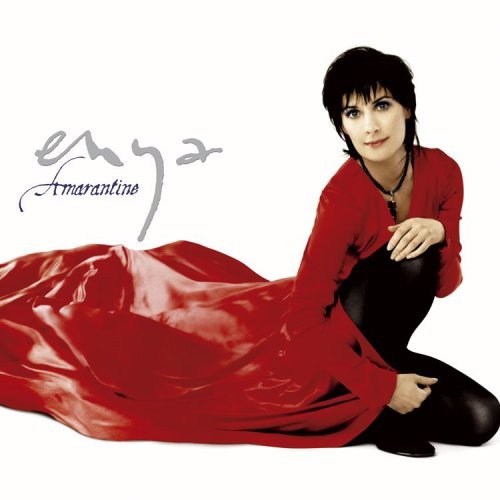
Who is Enya? More to the point: What is she? It's a question you can't help but ask of the 44-year-old singer from County Donegal, Ireland, who, over the past 20 years, has carved a niche as popular music's faerie queen. She's slathered her songs in otherworldly reverb, overdubbed her voice into angelic choirs, and appeared in music videos gliding through mist-shrouded landscapes. When we last heard from her, in 2002, she was crooning songs on the Fellowship of the Ring soundtrack—in Elvish. On the cover of her new album, Amarantine, she gazes out with big dewy moon eyes, wearing what appears to be a spinnaker. Search beneath its billows and you would undoubtedly find a pair of wings and a wand.

Enya may not be of this earth, but she's done rather well here. She began her career in 1980, singing with her brothers and sisters in Clannad, which blended pop tunes and traditional Irish folk music. She left the family band two years later, hooking up with producer/composer Nicky Ryan and lyricist Roma Ryan, the husband and wife who remain her collaborators to this day. The trio worked on film and television scores for several years before graduating in 1987 to proper albums, but those early gigs left their mark. To call Enya's music "cinematic" is an understatement—nearly every song plays like the soundtrack for a majestic film montage, with the camera swooping from lush green valleys to craggy coastlines and upward, zipping past mountain peaks, punching through cloud cover, soaring into the blue and beyond, to touch the face of God, or Gandalf.

On the opening song of Enya's self-titled debut album, "Play MediaThe Celts," this potent formula is already in place. A synth bassline provides a gentle throb; a major key melody swells, crests, recedes, and swells again. Rising over the music is Enya, or rather, Enyas—her voice multitracked into what sounds like a Gregorian choir on helium. The production values have been refined in the years since, with a synthesized string orchestra sound replacing the debut album's garish keyboard gusts. But Enya and the Ryans haven't altered their basic musical template one bit. And why should they? Enya broke through to a mass audience with Watermark (1988) and has gone on to sell 65 million records worldwide. The arrival of Amarantine, currently No. 10 on the Billboard album chart, is a reminder that Enya is one of the savviest operators in the music business and, well, an original. Twenty years ago, no one dreamed that there would be a huge audience for an ethereal female vocalist singing pseudo-classical airs with misty mystical overtones—and Enya remains the genre's only practitioner. No one has even tried to imitate her.

On Amarantine, Enya delivers her usual goods. The mood is worshipful and the tempos stately. There is a great deal of plinking and plucking; Enya is fond of harpsichords (or synthesizer approximations thereof) and, especially, pizzicato, the engine of many of her songs, including her signature hit, "Play MediaOrinoco Flow (Sail Away)." The new album's Play Mediatitle track (and first single) is an Enya song par excellence, with every beat of every measure marked by little string stabs, the singer's voice majestically inflated by reverb and the lyrics a string of fuzzy beatitudes: "You know love is with you when you rise/ For night and day belong to love." The song is insipid and insufferable; it may be the worst thing I've heard on the radio all year. It's also a fiendishly effective mood-piece.

Enya has sold more records than any Irish artist besides U2, and she has leveraged her roots, flavoring songs with uilleann pipes, singing in Gaelic, and gesturing in other ways to Riverdance enthusiasts. But Enya's real musical sources are less Old Eire than High Church. There is a maxim variously attributed to Bob Dylan and Elton John—"When in doubt, write a hymn"—and Enya and the Ryans have written hymns ad nauseam. Their signature trick is the use of multitracking to create the soul-stirring lushness of a full vocal choir. It's a cost-saving measure, for one thing. Why hire a roomful of monks when you can conjure a plainchant choir by simply overdubbing Enya's voice to infinity? The result is a singular sound—unreal, inhuman, spooky, and "spiritual"—perfect for those who desire the mystique of medieval choral music without, you know, the medieval music or the chorus. Naturally, it's impossible to replicate this effect in live performance, and Enya has never mounted a concert tour, which has only added to her air of mystery. Roma Ryan, meanwhile, has made the churchy connection explicit, writing several songs for Enya in Latin.

On Amarantine, though, there's a different kind of linguistic stunt. Inspired by their Fellowship of the Ring experiment with Elvish, Enya and Roma Ryan decided to create their own language, Loxian. I wish I could report that this gambit involves smoked salmon; in fact, it revolves around the more banal topic of extraterrestrials. The Loxians, Ryan told the Guardian, "Are much like us. They're in space, somewhere in the night. They're looking out, they're mapping the stars, and wondering if there is anyone else out there. It's to do with that concept: are we alone in the universe?"

Ryan has written a book about the language, Water Shows the Hidden Heart (also the title of a song on Amarantine), in which we learn, among other things, how to ask a Loxian if he'd like a cup of tea ("Hanee unnin eskan?"). The lyricist claims that it was necessary to invent an alternative language because "some pieces that Enya writes, English will just not sit on." But judging by songs like "Play MediaLess Than a Pearl," one of three Loxian numbers on the new album, Loxian is not appreciably more mellifluous than English or Gaelic or Latin or any of the other terrestrial tongues in which Enya has sung. I suspect other, cheekier motives: an effort to deepen Enya's reputation as a mystic and to tighten her grip on the Hobbit crowd. What's Loxian for "brand extension"?

The truth is, it really doesn't matter what language Enya is singing in. No one is listening to her words; the beginning and the end of her appeal is that big gauzy sound. Even if you hate the aesthetic, you have to respect the craft. Beneath Enya's billowing sonic mists, you can discern the structures and symmetries of classic pop songwriting: the melodic hooks that leap out from every song, the revitalizing excursion of an eight-measure bridge, the triumphal return to the main theme. It all might be perfectly tolerable if it weren't so queasily feather-light. As Enya's career has progressed, and her air-goddess shtick has become more entrenched, the bottom end has disappeared from her songs, to the point where, on Amarantine, there is virtually no bass, no lower-register sounds, nothing to ground the music. Enya would do well to remember that, once in a while, everyone—earthling, Middle-Earthling, and Loxian alike—needs to bang on a drum.
Jody Rosen is The Nation's music critic and the author of White Christmas: The Story of an American Song.

Article URL: http://www.slate.com/id/2133149/