New York Times
January 9, 2006
Buying Music From Anywhere and Selling It for Play on the Internet
By ROBERT LEVINE
Working in the media and entertainment group of the consultants McKinsey & Company, Greg Scholl got a firsthand look at the inefficiency in the music business: the major record labels focus on creating hits, and they rarely make money on releases that sell less than a few hundred thousand copies.
Now, as chief executive of the Orchard, a music distributor that sells to iTunes, Napster, Yahoo and other digital music services, Mr. Scholl is trying to exploit that inefficiency.
The Orchard is seeking to make money by purchasing music from small independent and foreign labels, and then distributing it to digital music services. In most music stores, CD's of, say, Chinese or Kenyan pop music would be consigned to the world-music bin as a good will gesture. But the economics of online stores is changing the financial calculations of the music business, making it profitable to sell a relatively small number of copies of a song, as long as a compact disc is not manufactured and distributed.
So instead of trying to sell millions of copies of hundreds of albums, the standard music industry strategy, the Orchard hopes to sell hundreds of copies of thousands of albums. In that way, the company is anticipating that sales will follow a pattern known as "the long tail," in which a large number of only marginally popular items can eventually produce significant revenue.
"We're not trying to make something a hit in order to make a business work," Mr. Scholl said. "We cast a very wide net, and we're going to catch some hits in it."
So far, the Orchard has made deals to sell about 650,000 tracks from 72 countries to various services, including ring tone outlets. Those tracks include music from relatively well-known bands like Black Uhuru as well as thousands of Chinese pop songs. Much of that music is not yet online, and the company is not sure if all of it will ever be. The plan is to add music to various services gradually, so it can be promoted appropriately.
The Orchard is not the only company looking to strike gold in the more obscure parts of the music business. One of the Orchard's rivals, the Independent Online Distribution Alliance, recently got the rights to digitally distribute 60,000 albums worth of music from a Chinese state-owned record company. The Orchard also faces competition from distribution companies owned by major labels.
The bet that executives of these businesses are making is that online services will increase demand for music that was not previously popular, just as eBay stoked the sale of old books and trinkets once considered largely worthless.
As Ted Schadler, an analyst at Forrester Research, put it: "In the world of shiny plastic discs, there are two barriers to getting the music you want: It's not in the store, or you've never heard of it. With digital distribution, the first barrier disappears. The second gets eased because of search engines, recommendation engines, technology like that."
The Orchard was founded in 1997 as a distribution company by Scott Cohen and Richard Gottehrer, a songwriter whose hits included "My Boyfriend's Back." Named after its original location, on Orchard Street on the Lower East Side of Manhattan, it began losing money and eventually acquired a reputation as being less than prompt with payments.
In 2003 the Orchard was purchased by Dimensional Associates, the private equity arm of JDS Capital Management, for what Mr. Scholl indicated was less than $10 million. Dimensional also owns the online service eMusic and a music publishing company, and was interested in the Orchard partly because of the digital distribution rights it had acquired.
"We were aware of the reputation," said Mr. Scholl, who was brought in to run the company, "and we worked to pay everyone back and begin more transparent accounting."
The Orchard, Mr. Scholl said, is a "digital aggregator," a middleman between small independent labels and digital music services. Major labels, as well as most sizable independents, deal with such services directly or through an established physical distribution company like the Alternative Distribution Alliance, owned by Warner Music.
The Orchard, as well as the Independent Online Distribution Alliance, mostly represent small labels in quantity. Along with a smattering of tracks recorded by stars before they signed with major labels, they offer an embarrassment of niches: free jazz, black metal and, in the case of the Orchard, a label that specializes in calliope music. And as the cost of putting tracks online is low, anything that can sell a few copies is worthwhile.
"I'd say we more or less want everything," remarked Kevin Arnold, founder and chief executive of the independent alliance.
Most digital distribution deals give the distributor 15 percent of the wholesale price of a track, usually somewhere around 65 cents, according to several people in the industry. Mr. Scholl said that the Orchard generally receives a higher percentage because it can effectively promote music to the services that sell it. To generate attention for some of the music from China, for example, it arranged for Jackie Chan to provide a list of his favorite tracks.
"It's the equivalent of taking the music from the backroom, where you'd have to look for it, into the store," Mr. Scholl said.
For some of the Orchard's international partners, the strategy is working. Epsa, an Argentine tango label, distributes about 500 albums through the Orchard. Laura Tesoriero, the label's chief executive, who also works with the Orchard as a representative in South America, said it had sold 10,000 digital tracks last quarter - no more than a rounding error by the standards of the United States pop music market, but enough to leave her feeling encouraged about the future of digital sales. A significant number of those sales, she expects, were to Argentines living in this country.
The most significant growth in the sale of foreign music could come as the idea of buying online gains traction among such immigrant communities.
"People in China don't think of Chinese music as world music and neither do Chinese people in the U.S.," said Yale Evelev, president of Luaka Bop, an independent label owned by David Byrne that specializes in pop music from Africa and South America.
The Orchard will face greater competition as major labels sell the music they release internationally in the United States. The EMI Group, for example, plans to make available in this country a majority of the music it sells anywhere in the world, Adam Klein, a vice president, said. As an example of the potential of this, Mr. Klein said that Hotei, a band signed by EMI in Japan, had one of the top 10 rock albums on iTunes after one of its songs appeared on the soundtrack of "Kill Bill: Volume 1."
Even with a business model that does not rely on hits, they would be welcome. "One man's niche is another man's mass market," Mike McGuire, a Gartner analyst said.
Sunday, January 08, 2006


Friday, January 06, 2006
Second chord sounds in world's longest lasting concert
Second chord sounds in world's longest lasting concert
Yahoo News
Thu Jan 5, 11:12 AM ET
A new chord was scheduled to sound in the world's slowest and longest lasting concert that is taking a total 639 years to perform.
The abandoned Buchardi church in Halberstadt, eastern Germany, is the venue for a mind-boggling 639-year-long performance of a piece of music by US experimental composer John Cage (1912-1992).
Entitled "organ2/ASLSP" (or "As SLow aS Possible"), the performance began on September 5, 2001 and is scheduled to last until 2639.
The first year and half of the performance was total silence, with the first chord -- G-sharp, B and G-sharp -- not sounding until February 2, 2003.
Then in July 2004, two additional Es, an octave apart, were sounded and are scheduled to be released later this year on May 5.
But at 5:00 pm (1600 GMT) on Thursday, the first chord was due to progress to a second -- comprising A, C and F-sharp -- and is to be held down over the next few years by weights on an organ being built especially for the project.
Cage originally conceived "ASLSP" in 1985 as a 20-minute work for piano, subsequently transcribing it for organ in 1987.
But organisers of the John Cage Organ Project decided to take the composer at his word and stretch out the performance for 639 years, using Cage's transcription for organ.
The enormous running time was chosen to commemorate the creation of Halberstadt's historic Blockwerk organ in 1361 -- 639 years before the current project started.
That original organ, built by Nikolaus Faber for Halberstadt's cathedral, was the first organ ever to be used for liturgical purposes, ringing in a new era in which the organ has played a central role in church music ever since.
As part of Halberstadt's John Cage Organ Project, a brand-new organ is being built specially, with new pipes added in time for when new notes are scheduled to sound.
Cage was a pupil of one of the 20th century's most influential composers, Arnold Schoenberg (1874-1951).
Cage's avant-garde oeuvre includes works such as the notorious "4'33", a piece comprising four minutes and 33 seconds of total silence, all meticulously notated.
The organisers of the John Cage Organ Project say the record-breaking performance in Halberstadt also has a philosophical background -- to "rediscover calm and slowness in today's fast-changing world".
Yahoo News
Thu Jan 5, 11:12 AM ET
A new chord was scheduled to sound in the world's slowest and longest lasting concert that is taking a total 639 years to perform.
The abandoned Buchardi church in Halberstadt, eastern Germany, is the venue for a mind-boggling 639-year-long performance of a piece of music by US experimental composer John Cage (1912-1992).
Entitled "organ2/ASLSP" (or "As SLow aS Possible"), the performance began on September 5, 2001 and is scheduled to last until 2639.
The first year and half of the performance was total silence, with the first chord -- G-sharp, B and G-sharp -- not sounding until February 2, 2003.
Then in July 2004, two additional Es, an octave apart, were sounded and are scheduled to be released later this year on May 5.
But at 5:00 pm (1600 GMT) on Thursday, the first chord was due to progress to a second -- comprising A, C and F-sharp -- and is to be held down over the next few years by weights on an organ being built especially for the project.
Cage originally conceived "ASLSP" in 1985 as a 20-minute work for piano, subsequently transcribing it for organ in 1987.
But organisers of the John Cage Organ Project decided to take the composer at his word and stretch out the performance for 639 years, using Cage's transcription for organ.
The enormous running time was chosen to commemorate the creation of Halberstadt's historic Blockwerk organ in 1361 -- 639 years before the current project started.
That original organ, built by Nikolaus Faber for Halberstadt's cathedral, was the first organ ever to be used for liturgical purposes, ringing in a new era in which the organ has played a central role in church music ever since.
As part of Halberstadt's John Cage Organ Project, a brand-new organ is being built specially, with new pipes added in time for when new notes are scheduled to sound.
Cage was a pupil of one of the 20th century's most influential composers, Arnold Schoenberg (1874-1951).
Cage's avant-garde oeuvre includes works such as the notorious "4'33", a piece comprising four minutes and 33 seconds of total silence, all meticulously notated.
The organisers of the John Cage Organ Project say the record-breaking performance in Halberstadt also has a philosophical background -- to "rediscover calm and slowness in today's fast-changing world".
Thursday, December 29, 2005
Obituary: Filmmaker Documented New Orleans' Music
http://www.latimes.com/news/obituaries/la-me-palfi29dec29,0,3363139.story?coll=la-home-obituaries
From the Los Angeles Times
OBITUARIES
Stevenson J. Palfi, 53; Filmmaker Documented New Orleans' Music
By Dennis McLellan
Times Staff Writer
December 29, 2005
Stevenson J. Palfi, a New Orleans musical documentarian best known for "Piano Players Rarely Ever Play Together," a 1982 look at three generations of Big Easy piano greats, has died. He was 53.
Palfi died of a self-inflicted gunshot wound Dec. 14 at home, his family told the Times-Picayune of New Orleans. Palfi, who left a suicide note and a will, had been severely depressed after Hurricane Katrina's floodwaters destroyed years of files, photographs and other possessions at his home in the Mid-City area.
"His death was a tragedy for everybody," Jan Ramsey, editor and publisher of OffBeat Magazine, a New Orleans music publication, told The Times on Wednesday. "Stevenson was a valuable asset to the music community here in terms of preserving the culture."
"Piano Players Rarely Ever Play Together" focused on New Orleans keyboard luminaries Isidore "Tuts" Washington, Henry Roeland "Professor Longhair" Byrd and Allen Toussaint. Toussaint's songwriting hits include "Working in the Coal Mine," "Mother-in-Law" and "Southern Nights."
The documentary, which was frequently shown on PBS and is still in distribution, provided insight into the way the three players influenced one another's styles and showed the only time they ever rehearsed together for a joint concert.
Byrd died two days before the scheduled performance, and his jazz funeral, along with the Washington-Toussaint tribute concert, became part of the documentary.
"Piano Players Rarely Play Together," Times-Picayune movie writer David Baron said, was "a last-chance document of one key thread in the Big Easy's inimitable R&B tradition."
Ramsey said, "In terms of a preservation piece, it's remarkable, because there is very little [previous] footage of Professor Longhair or Tuts Washington, and when you get all three of them together in a studio, it's unprecedented."
Once described by his city's newspaper as "the Big Easy's big encyclopedia of music," Palfi also documented other Crescent City musicians, such as singer Ernie K-Doe and Preservation Hall banjoist Manny Sayles.
Palfi co-produced "Played in the USA," a 13-part series of video and film documentaries about American music for the Learning Channel. The 1991 series included "Papa John Creach: Setting the Record Straight," Palfi's documentary on the onetime fiddler with Jefferson Airplane and Jefferson Starship.
As a filmmaker, Palfi once described himself as a slow, meticulous worker. At the time of his death, he was nearing completion on "Songwriter, Unknown," a feature-length documentary on Toussaint. Funding for the project had been aided by a Guggenheim Fellowship in 1993.
"My friend Stevenson Palfi's life's work was immortalizing others, and, in so doing, he has immortalized himself," Toussaint told the Times-Picayune this week. "His work will outlast all of us."
Palfi's love of music began while he was growing up in Chicago, where his earliest memories included listening constantly to Harry Belafonte calypso records and recordings of speeches by 1950s Democratic presidential candidate Adlai Stevenson.
"I listened to Stevenson because my parents named me after him," he told The Times in 1991. "I'm not sure his speeches were especially musical, though there was a cadence to them."
Palfi started using video as an aid while student-teaching.
He later taught documentary production, although he had yet to make one himself. But after buying a camera and getting a ride with a friend to Mardi Gras during spring break, he found not only his calling in life, but also a new home.
His survivors include a daughter, Nell Palfi; his father, Alfred M. Palfi; and a sister, Cynthia Penfold.
A tribute to the filmmaker will be presented at OffBeat's Best of the Beat Awards ceremony Jan. 21 at the New Orleans House of Blues.
From the Los Angeles Times
OBITUARIES
Stevenson J. Palfi, 53; Filmmaker Documented New Orleans' Music
By Dennis McLellan
Times Staff Writer
December 29, 2005
Stevenson J. Palfi, a New Orleans musical documentarian best known for "Piano Players Rarely Ever Play Together," a 1982 look at three generations of Big Easy piano greats, has died. He was 53.
Palfi died of a self-inflicted gunshot wound Dec. 14 at home, his family told the Times-Picayune of New Orleans. Palfi, who left a suicide note and a will, had been severely depressed after Hurricane Katrina's floodwaters destroyed years of files, photographs and other possessions at his home in the Mid-City area.
"His death was a tragedy for everybody," Jan Ramsey, editor and publisher of OffBeat Magazine, a New Orleans music publication, told The Times on Wednesday. "Stevenson was a valuable asset to the music community here in terms of preserving the culture."
"Piano Players Rarely Ever Play Together" focused on New Orleans keyboard luminaries Isidore "Tuts" Washington, Henry Roeland "Professor Longhair" Byrd and Allen Toussaint. Toussaint's songwriting hits include "Working in the Coal Mine," "Mother-in-Law" and "Southern Nights."
The documentary, which was frequently shown on PBS and is still in distribution, provided insight into the way the three players influenced one another's styles and showed the only time they ever rehearsed together for a joint concert.
Byrd died two days before the scheduled performance, and his jazz funeral, along with the Washington-Toussaint tribute concert, became part of the documentary.
"Piano Players Rarely Play Together," Times-Picayune movie writer David Baron said, was "a last-chance document of one key thread in the Big Easy's inimitable R&B tradition."
Ramsey said, "In terms of a preservation piece, it's remarkable, because there is very little [previous] footage of Professor Longhair or Tuts Washington, and when you get all three of them together in a studio, it's unprecedented."
Once described by his city's newspaper as "the Big Easy's big encyclopedia of music," Palfi also documented other Crescent City musicians, such as singer Ernie K-Doe and Preservation Hall banjoist Manny Sayles.
Palfi co-produced "Played in the USA," a 13-part series of video and film documentaries about American music for the Learning Channel. The 1991 series included "Papa John Creach: Setting the Record Straight," Palfi's documentary on the onetime fiddler with Jefferson Airplane and Jefferson Starship.
As a filmmaker, Palfi once described himself as a slow, meticulous worker. At the time of his death, he was nearing completion on "Songwriter, Unknown," a feature-length documentary on Toussaint. Funding for the project had been aided by a Guggenheim Fellowship in 1993.
"My friend Stevenson Palfi's life's work was immortalizing others, and, in so doing, he has immortalized himself," Toussaint told the Times-Picayune this week. "His work will outlast all of us."
Palfi's love of music began while he was growing up in Chicago, where his earliest memories included listening constantly to Harry Belafonte calypso records and recordings of speeches by 1950s Democratic presidential candidate Adlai Stevenson.
"I listened to Stevenson because my parents named me after him," he told The Times in 1991. "I'm not sure his speeches were especially musical, though there was a cadence to them."
Palfi started using video as an aid while student-teaching.
He later taught documentary production, although he had yet to make one himself. But after buying a camera and getting a ride with a friend to Mardi Gras during spring break, he found not only his calling in life, but also a new home.
His survivors include a daughter, Nell Palfi; his father, Alfred M. Palfi; and a sister, Cynthia Penfold.
A tribute to the filmmaker will be presented at OffBeat's Best of the Beat Awards ceremony Jan. 21 at the New Orleans House of Blues.
Tuesday, December 27, 2005
In Praise of Enya
Slate
music box
The Faerie Queen
The secret to Enya's success.
By Jody Rosen
Posted Tuesday, Dec. 27, 2005, at 6:06 AM ET
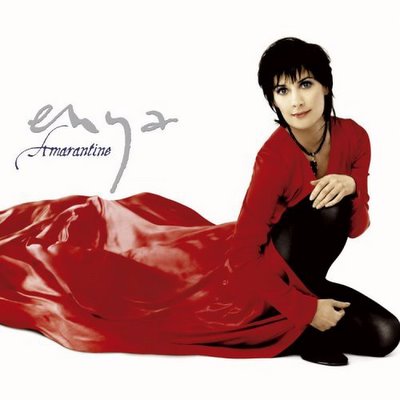
Who is Enya? More to the point: What is she? It's a question you can't help but ask of the 44-year-old singer from County Donegal, Ireland, who, over the past 20 years, has carved a niche as popular music's faerie queen. She's slathered her songs in otherworldly reverb, overdubbed her voice into angelic choirs, and appeared in music videos gliding through mist-shrouded landscapes. When we last heard from her, in 2002, she was crooning songs on the Fellowship of the Ring soundtrack—in Elvish. On the cover of her new album, Amarantine, she gazes out with big dewy moon eyes, wearing what appears to be a spinnaker. Search beneath its billows and you would undoubtedly find a pair of wings and a wand.
Enya may not be of this earth, but she's done rather well here. She began her career in 1980, singing with her brothers and sisters in Clannad, which blended pop tunes and traditional Irish folk music. She left the family band two years later, hooking up with producer/composer Nicky Ryan and lyricist Roma Ryan, the husband and wife who remain her collaborators to this day. The trio worked on film and television scores for several years before graduating in 1987 to proper albums, but those early gigs left their mark. To call Enya's music "cinematic" is an understatement—nearly every song plays like the soundtrack for a majestic film montage, with the camera swooping from lush green valleys to craggy coastlines and upward, zipping past mountain peaks, punching through cloud cover, soaring into the blue and beyond, to touch the face of God, or Gandalf.
On the opening song of Enya's self-titled debut album, "Play MediaThe Celts," this potent formula is already in place. A synth bassline provides a gentle throb; a major key melody swells, crests, recedes, and swells again. Rising over the music is Enya, or rather, Enyas—her voice multitracked into what sounds like a Gregorian choir on helium. The production values have been refined in the years since, with a synthesized string orchestra sound replacing the debut album's garish keyboard gusts. But Enya and the Ryans haven't altered their basic musical template one bit. And why should they? Enya broke through to a mass audience with Watermark (1988) and has gone on to sell 65 million records worldwide. The arrival of Amarantine, currently No. 10 on the Billboard album chart, is a reminder that Enya is one of the savviest operators in the music business and, well, an original. Twenty years ago, no one dreamed that there would be a huge audience for an ethereal female vocalist singing pseudo-classical airs with misty mystical overtones—and Enya remains the genre's only practitioner. No one has even tried to imitate her.
On Amarantine, Enya delivers her usual goods. The mood is worshipful and the tempos stately. There is a great deal of plinking and plucking; Enya is fond of harpsichords (or synthesizer approximations thereof) and, especially, pizzicato, the engine of many of her songs, including her signature hit, "Play MediaOrinoco Flow (Sail Away)." The new album's Play Mediatitle track (and first single) is an Enya song par excellence, with every beat of every measure marked by little string stabs, the singer's voice majestically inflated by reverb and the lyrics a string of fuzzy beatitudes: "You know love is with you when you rise/ For night and day belong to love." The song is insipid and insufferable; it may be the worst thing I've heard on the radio all year. It's also a fiendishly effective mood-piece.
Enya has sold more records than any Irish artist besides U2, and she has leveraged her roots, flavoring songs with uilleann pipes, singing in Gaelic, and gesturing in other ways to Riverdance enthusiasts. But Enya's real musical sources are less Old Eire than High Church. There is a maxim variously attributed to Bob Dylan and Elton John—"When in doubt, write a hymn"—and Enya and the Ryans have written hymns ad nauseam. Their signature trick is the use of multitracking to create the soul-stirring lushness of a full vocal choir. It's a cost-saving measure, for one thing. Why hire a roomful of monks when you can conjure a plainchant choir by simply overdubbing Enya's voice to infinity? The result is a singular sound—unreal, inhuman, spooky, and "spiritual"—perfect for those who desire the mystique of medieval choral music without, you know, the medieval music or the chorus. Naturally, it's impossible to replicate this effect in live performance, and Enya has never mounted a concert tour, which has only added to her air of mystery. Roma Ryan, meanwhile, has made the churchy connection explicit, writing several songs for Enya in Latin.
On Amarantine, though, there's a different kind of linguistic stunt. Inspired by their Fellowship of the Ring experiment with Elvish, Enya and Roma Ryan decided to create their own language, Loxian. I wish I could report that this gambit involves smoked salmon; in fact, it revolves around the more banal topic of extraterrestrials. The Loxians, Ryan told the Guardian, "Are much like us. They're in space, somewhere in the night. They're looking out, they're mapping the stars, and wondering if there is anyone else out there. It's to do with that concept: are we alone in the universe?"
Ryan has written a book about the language, Water Shows the Hidden Heart (also the title of a song on Amarantine), in which we learn, among other things, how to ask a Loxian if he'd like a cup of tea ("Hanee unnin eskan?"). The lyricist claims that it was necessary to invent an alternative language because "some pieces that Enya writes, English will just not sit on." But judging by songs like "Play MediaLess Than a Pearl," one of three Loxian numbers on the new album, Loxian is not appreciably more mellifluous than English or Gaelic or Latin or any of the other terrestrial tongues in which Enya has sung. I suspect other, cheekier motives: an effort to deepen Enya's reputation as a mystic and to tighten her grip on the Hobbit crowd. What's Loxian for "brand extension"?
The truth is, it really doesn't matter what language Enya is singing in. No one is listening to her words; the beginning and the end of her appeal is that big gauzy sound. Even if you hate the aesthetic, you have to respect the craft. Beneath Enya's billowing sonic mists, you can discern the structures and symmetries of classic pop songwriting: the melodic hooks that leap out from every song, the revitalizing excursion of an eight-measure bridge, the triumphal return to the main theme. It all might be perfectly tolerable if it weren't so queasily feather-light. As Enya's career has progressed, and her air-goddess shtick has become more entrenched, the bottom end has disappeared from her songs, to the point where, on Amarantine, there is virtually no bass, no lower-register sounds, nothing to ground the music. Enya would do well to remember that, once in a while, everyone—earthling, Middle-Earthling, and Loxian alike—needs to bang on a drum.
Jody Rosen is The Nation's music critic and the author of White Christmas: The Story of an American Song.
Article URL: http://www.slate.com/id/2133149/
music box
The Faerie Queen
The secret to Enya's success.
By Jody Rosen
Posted Tuesday, Dec. 27, 2005, at 6:06 AM ET
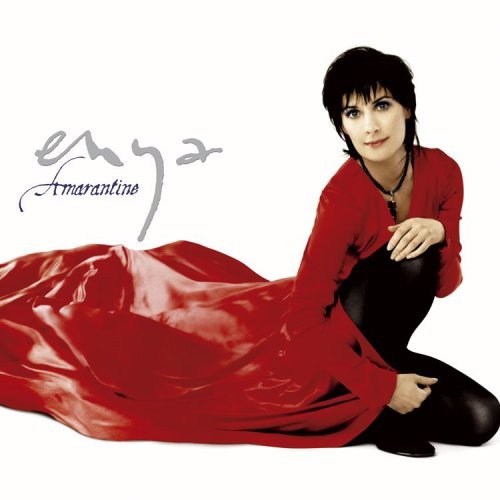
Who is Enya? More to the point: What is she? It's a question you can't help but ask of the 44-year-old singer from County Donegal, Ireland, who, over the past 20 years, has carved a niche as popular music's faerie queen. She's slathered her songs in otherworldly reverb, overdubbed her voice into angelic choirs, and appeared in music videos gliding through mist-shrouded landscapes. When we last heard from her, in 2002, she was crooning songs on the Fellowship of the Ring soundtrack—in Elvish. On the cover of her new album, Amarantine, she gazes out with big dewy moon eyes, wearing what appears to be a spinnaker. Search beneath its billows and you would undoubtedly find a pair of wings and a wand.
Enya may not be of this earth, but she's done rather well here. She began her career in 1980, singing with her brothers and sisters in Clannad, which blended pop tunes and traditional Irish folk music. She left the family band two years later, hooking up with producer/composer Nicky Ryan and lyricist Roma Ryan, the husband and wife who remain her collaborators to this day. The trio worked on film and television scores for several years before graduating in 1987 to proper albums, but those early gigs left their mark. To call Enya's music "cinematic" is an understatement—nearly every song plays like the soundtrack for a majestic film montage, with the camera swooping from lush green valleys to craggy coastlines and upward, zipping past mountain peaks, punching through cloud cover, soaring into the blue and beyond, to touch the face of God, or Gandalf.
On the opening song of Enya's self-titled debut album, "Play MediaThe Celts," this potent formula is already in place. A synth bassline provides a gentle throb; a major key melody swells, crests, recedes, and swells again. Rising over the music is Enya, or rather, Enyas—her voice multitracked into what sounds like a Gregorian choir on helium. The production values have been refined in the years since, with a synthesized string orchestra sound replacing the debut album's garish keyboard gusts. But Enya and the Ryans haven't altered their basic musical template one bit. And why should they? Enya broke through to a mass audience with Watermark (1988) and has gone on to sell 65 million records worldwide. The arrival of Amarantine, currently No. 10 on the Billboard album chart, is a reminder that Enya is one of the savviest operators in the music business and, well, an original. Twenty years ago, no one dreamed that there would be a huge audience for an ethereal female vocalist singing pseudo-classical airs with misty mystical overtones—and Enya remains the genre's only practitioner. No one has even tried to imitate her.
On Amarantine, Enya delivers her usual goods. The mood is worshipful and the tempos stately. There is a great deal of plinking and plucking; Enya is fond of harpsichords (or synthesizer approximations thereof) and, especially, pizzicato, the engine of many of her songs, including her signature hit, "Play MediaOrinoco Flow (Sail Away)." The new album's Play Mediatitle track (and first single) is an Enya song par excellence, with every beat of every measure marked by little string stabs, the singer's voice majestically inflated by reverb and the lyrics a string of fuzzy beatitudes: "You know love is with you when you rise/ For night and day belong to love." The song is insipid and insufferable; it may be the worst thing I've heard on the radio all year. It's also a fiendishly effective mood-piece.
Enya has sold more records than any Irish artist besides U2, and she has leveraged her roots, flavoring songs with uilleann pipes, singing in Gaelic, and gesturing in other ways to Riverdance enthusiasts. But Enya's real musical sources are less Old Eire than High Church. There is a maxim variously attributed to Bob Dylan and Elton John—"When in doubt, write a hymn"—and Enya and the Ryans have written hymns ad nauseam. Their signature trick is the use of multitracking to create the soul-stirring lushness of a full vocal choir. It's a cost-saving measure, for one thing. Why hire a roomful of monks when you can conjure a plainchant choir by simply overdubbing Enya's voice to infinity? The result is a singular sound—unreal, inhuman, spooky, and "spiritual"—perfect for those who desire the mystique of medieval choral music without, you know, the medieval music or the chorus. Naturally, it's impossible to replicate this effect in live performance, and Enya has never mounted a concert tour, which has only added to her air of mystery. Roma Ryan, meanwhile, has made the churchy connection explicit, writing several songs for Enya in Latin.
On Amarantine, though, there's a different kind of linguistic stunt. Inspired by their Fellowship of the Ring experiment with Elvish, Enya and Roma Ryan decided to create their own language, Loxian. I wish I could report that this gambit involves smoked salmon; in fact, it revolves around the more banal topic of extraterrestrials. The Loxians, Ryan told the Guardian, "Are much like us. They're in space, somewhere in the night. They're looking out, they're mapping the stars, and wondering if there is anyone else out there. It's to do with that concept: are we alone in the universe?"
Ryan has written a book about the language, Water Shows the Hidden Heart (also the title of a song on Amarantine), in which we learn, among other things, how to ask a Loxian if he'd like a cup of tea ("Hanee unnin eskan?"). The lyricist claims that it was necessary to invent an alternative language because "some pieces that Enya writes, English will just not sit on." But judging by songs like "Play MediaLess Than a Pearl," one of three Loxian numbers on the new album, Loxian is not appreciably more mellifluous than English or Gaelic or Latin or any of the other terrestrial tongues in which Enya has sung. I suspect other, cheekier motives: an effort to deepen Enya's reputation as a mystic and to tighten her grip on the Hobbit crowd. What's Loxian for "brand extension"?
The truth is, it really doesn't matter what language Enya is singing in. No one is listening to her words; the beginning and the end of her appeal is that big gauzy sound. Even if you hate the aesthetic, you have to respect the craft. Beneath Enya's billowing sonic mists, you can discern the structures and symmetries of classic pop songwriting: the melodic hooks that leap out from every song, the revitalizing excursion of an eight-measure bridge, the triumphal return to the main theme. It all might be perfectly tolerable if it weren't so queasily feather-light. As Enya's career has progressed, and her air-goddess shtick has become more entrenched, the bottom end has disappeared from her songs, to the point where, on Amarantine, there is virtually no bass, no lower-register sounds, nothing to ground the music. Enya would do well to remember that, once in a while, everyone—earthling, Middle-Earthling, and Loxian alike—needs to bang on a drum.
Jody Rosen is The Nation's music critic and the author of White Christmas: The Story of an American Song.
Article URL: http://www.slate.com/id/2133149/
Monday, December 26, 2005
Last Piece of Hip-Hop Culture Is Co-oped

What Looks Like Graffiti Could Really Be an Ad
By Mike Musgrove
Washington Post Staff Writer
Monday, December 26, 2005; A01
The images are painted directly onto building walls in urban areas, graffiti-style. Wide-eyed kids, portrayed in a stylized, comic-book rendering, pose with a mysterious, hand-size gadget. One licks his like a lollipop. Another is playing paddleball with the thing.
What looks like artful vandalism, though, is really part of a guerrilla marketing campaign for Sony's PlayStation Portable, a device that can play games, music and movies.
In major cities such as San Francisco, Miami and New York, Sony has paid building owners to use wall space for the campaign, and the images have become a familiar sight. It's the latest effort by a big corporation to capitalize on the hot world of street art to reach an urban market that has learned to tune out traditional advertising.
Nike Inc., Time magazine and even stodgy International Business Machines Corp. are among the growing list of companies that have dabbled in street art to get their marketing messages out.
The trend makes some artists squeamish even as others start marketing firms or open galleries. In Washington's Adams Morgan neighborhood, cell phone maker Nokia Corp. used sidewalk chalk drawings to promote its N-Gage, a cell phone aimed at gamers, when it launched the product in 2003.
Advertising Age critic Bob Garfield said that an increase in such edgy advertising campaigns, which attempt to create "buzz about buzz," are a sign that traditional advertising methods are failing.
"Marketers are desperate to find ways to reach people," Garfield said. "Especially young men, who are far too busy playing Grand Theft Auto to notice, say, a 30-second TV commercial."
Sony spokesman Patrick Seybold said the company's PSP campaign is aimed at a consumer segment he calls the "urban nomad," which he described as "consumers who are enjoying their entertainment on-the-go in an artistic and creative way." Sony's ads have not appeared in the District; according to the city's Department of Consumer and Regulatory Affairs, they would violate outdoor advertising policy.
The increasingly blurred lines between street art, graffiti and marketing is leading to strange situations. One graffiti artist was detained by police in Chicago last summer after he was caught spray-painting over a paid graffiti ad for Axe deodorant.
Among artists who risk arrest to put up paintings and posters they hope will surprise, provoke or delight passersby, the co-opting of street art by corporate America is touchy issue. Patrick McNeil, a member of a three-person street-art collective called Faile, accused Sony of "trying to cash in on an art movement where they and the product they are selling don't belong" and derided Sony's painters as "an army of pimped-out artists."
But street artists who do corporate work to pay the bills say they are doing the same creative work they did before, just in a different medium.
Artist Dave Kinsey was one of the pioneers in the field when he opened his design studio, Blk/Mrkt, in the Los Angeles area a decade ago. His shop, which has helped market such products as Mountain Dew soda and the band Black Eyed Peas, includes a gallery to promote up-and-coming artists.
Kinsey said his commercial work has helped clients get in touch with an audience they weren't communicating with effectively before. "If you do good work and you're happy with what you do, it can be in any environment," he said. "If you're an artist, you can apply your talents and your ideas to whatever it is."
Other street artists who do corporate work are critical of the stealthy aspects of Sony's campaign. Artist Shepard Fairey said he steers advertising clients away from trying to hide their sponsorship.
"Corporations are much better off being very open and being proud enough to say: 'We think this is a cool enough product to stand up under hipsters' scrutiny, we don't have to try and trick you,' " said Fairey, who used to be a business partner with Kinsey. "If it's not cool enough for that, they need to rethink the product itself."
Fairey gained underground fame for creating a perplexing series of stickers featuring a grainy image of wrestler Andre Roussimoff, accompanied with the line "Andre the Giant has a posse." For those who became hip to the project, spotting the stickers on street signs and in obscure urban areas across the globe became a minor pastime.
Now Fairey sells a line of clothes at his Web site, was commissioned to design the movie poster for the new film about Johnny Cash and does commercial graphics work for commercial clients such as Honda. In February, he will star in a video game about street art from Atari. MTV Films announced that it bought rights to make a movie based on the game.
For corporations, graffiti and street art can be a tempting way to get noticed. When Time magazine paid a graffiti artist to festoon a wall in the SoHo section of New York this summer, a local politician denounced it as underwriting the work of vandals. Time magazine Associate Publisher and marketing director Taylor Gray said the stunt was a success because it "cut through the clutter" of marketing messages to which New Yorkers are exposed every day.
Many street artists say they can intuitively grasp this strategy, even if it makes them cringe. For New York-based street artist Michael De Feo, the PSP campaign seems to elicit a shrug. "Who are we to say they can't do it?" he said.
De Feo, a high school art teacher who spends his evenings decorating cities with cartoonish paintings and stencils of flowers and sharks, said the worse crime in Sony's PSP ad campaign is a lack of originality.
"People seem to get all bent out of shape with campaigns like this, when the fact remains that most of the public has the ability to tell good art from bad," he said.
De Feo does not rank the PSP campaign as good art. "I think it really lacks creativity," he said. "It's boring."
© 2005 The Washington Post Company
Wednesday, December 21, 2005
Year's Best jazz albums are decades old

New York Times
December 21, 2005
Critic's Notebook
Jazz Gem Made in '57 Is a Favorite of 2005
By BEN RATLIFF
My favorite jazz record released this year, and one of my favorites of any year, was made in 1957. I first heard "Thelonious Monk Quartet With John Coltrane at Carnegie Hall" (Blue Note) at the Library of Congress in April, after the news of its discovery had been made public. It sounded pretty good then, but you can never really tell when hearing something over a high-quality sound system in front of interested parties. I have listened to it repeatedly since, and it seems to be much better than I first thought - solid, juicy, truly great.
Another of the year's new jazz records - John Coltrane's "One Down, One Up: Live at the Half Note" (Impulse) - was made in 1965. It disqualifies itself from consideration for my list of the year's best jazz albums only because it has been heard, in bits and pieces, on illegal tapes for 40 years. (I got mine from a great saxophonist who wanted to spread the word.) But it is also, I think, a masterpiece.
There's a reason why these records stand out as the year's best, and I get the sense that many people feel they know that reason.
They believe, or have heard, that jazz crinkled up and collapsed after Coltrane. That the musicians have defaulted on audiences, going deep into their own heads instead. That there's been no successor, because Coltrane broke the mold, threw away the key, set the bar too high, stretched the envelope as far as it would go, established a holding pattern, and other truth-obscuring clichés.
It would simplify things, but no. In fact, I don't think the reason has much to do with Coltrane per se - other than the obvious fact that he made superior music. (He did create a few stock models in jazz that persisted for an impressively long period after his death, but that's a different matter.)
These are among the year's great albums because they are high-quality proofs of one of jazz's basic properties: the possibility for transcendence on the gig, for a great band to be even better. This is true in any kind of music, but it is much more true in jazz.
There are a lot of great jazz musicians in New York, and in the world. But the number of great and economically sustainable bands has declined, along with an international audience and a circuit of clubs that encourages those bands to feel a sense of competition, and opportunities for those bands to play repeatedly for regular audiences in the same small places. A. J. Liebling once wrote that French food declined after World War I with the rise of highway driving, since small restaurants weren't committed to satisfying the same clientele night after night. Instead, they could serve the same dishes and not worry about improvement; regular waves of new diners would chew away, unaware of the stasis.
In a way, the same goes for jazz. Both bands, the Monk-Coltrane Quartet of 1957 and the Coltrane Quartet of 1965, had places in New York to take root. Monk and Coltrane played as many as 75 nights within a five-month stretch at the Five Spot Cafe in the East Village. The Coltrane Quartet played 14 weeks at the Half Note in the span of a year, from spring 1964 to spring 1965. Fourteen. It was a different time in many ways: it seems that anytime I meet someone who saw either of those bands at those clubs, they won't say that they went once, as if to cross it off a list; they went twice or three times a week, as part of their lives. (No Internet. No TiVo. Cheap rent. No risk of being thought a loser if you liked to go to jazz clubs at night.)
So there were hundreds of new jazz records this year that weren't as good? It gets forgotten, so it needs repeating: the studio is an unreliable gauge of what the best jazz groups are really up to, even at the highest levels.
Monk's quartet with Coltrane recorded three songs in the studio in summer 1957, at the beginning of that band's short existence. They can be heard on "Thelonious Monk With John Coltrane" (Riverside/Fantasy). They're very good, and they contain a newly advanced Coltrane. But they are dry-runs when set next to the 51 minutes from Carnegie Hall, which were discovered for the first time in January.
The Carnegie tape comes from late November 1957, after five rigorous months of Five Spot gigs, toward the end of the band's six-month life. (Very little taped material of this band in that year at the Five Spot, and with low fidelity, is known to exist.) On the Carnegie album the band is relaxed, limber, magnetic; the tempos are more wakeful. Compare the tune "Nutty" between the studio and stage versions, and you will hear it quickly. Coltrane has become agile, finding a flexible way of running his original patterns. Monk balances an inscrutable serenity against driving, almost violent figures. And everything coming from Shadow Wilson, the drummer, is to be savored: he guards and upholds the groove, while building small, richly detailed accents around it.
But the band ended a little more than a month later, and contractual issues between Coltrane and Monk's record labels made it impossible for them to record again. We're lucky to have this.
The Coltrane "One Down, One Up" recordings were made by the radio station WABC-FM, in 1965, for a radio show called "Portraits in Jazz" with Alan Grant. Even more than the Monk-Coltrane recording, the music is completely based in the rhetoric of the band's live performances; it is a different discipline entirely from studio recordings. The longest piece on the Monk-Coltrane, "Sweet and Lovely," is nine and a half minutes; the title track of "One Down, One Up" runs to nearly 28. The Coltrane band had been playing pieces at this length for at least four years, but was still making fairly structured music in the studio. What we hear is a band's shared language in its highest period; Coltrane and the drummer Elvin Jones rarely sounded more individually free, and still elastically tethered to each other.
The same principle has generated other good records this year, too. An excellent, previously unknown Charlie Parker-Dizzy Gillespie concert from 1945, released on Uptown Records. A new Wynton Marsalis record, "Live at the House of Tribes," recorded in front of an audience of 50 - his best, to a certain way of thinking, since "Live at Blues Alley" in 1986. And coming in February, a recording from 1996 of the Omer Avital Sextet at Smalls, an excellent band of its moment that played hundreds of nights at that tiny club and never got to put out a record properly during its life.
Whenever history tells you that a masterpiece was recorded in the studio on a certain day at a certain hour - Charlie Parker's "Koko," Pat Metheny's "Bright Size Life," Ornette Coleman's "Shape of Jazz to Come" - it's probably not a patch on what those groups did later that night.
This is how jazz works. It is not a volume business. (Its essence is the opposite of business.) Its greatest experiences are given away cheaply, to rooms of 50 to 200 people. Literature and visual art are both so different: the creator stands back, judges a fixed object, then refines or discards before letting the words go to print, or putting images to walls. A posthumously found Hemingway novel is never as good as what he judged to be his best work. But in jazz there is always the promise that the art's greatest examples - even by those long dead - may still be found.
Tuesday, December 20, 2005
Iranians Shrug Off Ban on Western Music
Iranians Shrug Off Ban on Western Music
By ALI AKBAR DAREINI, Associated Press WriterTue Dec 20, 9:52 AM ET
Hard-line President Mahmoud Ahmadinejad's ban on Western music fell on deaf ears Tuesday, as shop owners and music enthusiasts in the Iranian capital continued selling, buying and listening to everything from hip-hop to country rock.
The official IRAN Persian daily reported Monday that Ahmadinejad, as head of the Supreme Cultural Revolutionary Council, ordered the enactment of an October ruling by the council to ban all Western music, including classical music, on state broadcast outlets.
"This president speaks as if he is living in the Stone Age. This man has to understand that he can't tell the people what to listen to and what not to listen to," said Mohammed Reza Hosseinpour as he browsed through a Tehran music shop.
The shop's owner said he did not expect the president's ban to be implemented.
"Clerics and officials speak about imposing restrictions every other day. I don't think it's going to be enforced," said Reza Sadeghi as he counted some bills he received from the sale of an Eric Clapton tape.
The order was an eerie reminder of the 1979 Islamic revolution, when popular music was outlawed as "un-Islamic" under Ayatollah Ruhollah Khomeini. In the revolution's early years, police stopped cars to search for Western music tapes, destroying any they found and sometimes arresting those caught listening to them.
But little seems to have changed in Tehran since Monday's ruling.
State radio and TV stations sometimes play Western music — without lyrics — in the background of newscasts and other programs, but more often they play Iranian pop or traditional music. On Tuesday, there was only Iranian music, but it was not immediately clear if that was because of the ban.
The ban applies only to state-run radio and television. Tehran residents, accustomed to the relaxed rules and rare enforcement of such restrictions in the past 10 years, seemed unconcerned that it might signal a return to the wider restrictions imposed during the revolution.
"Don't take this man (Ahmadinejad) seriously," said Pari Mahmoudi, a teen driving in the capital, as the Eagles' "Hotel California" blared from the car speakers.
The expectation among many was that the new ban would fall by the wayside as others have recently. Iran's government has banned the sale of music by female singers in the past and has forbidden women from wearing heavy makeup. Neither order has been enforced.
As the revolutionary fervor started to fade, some light classical music was allowed on Iranian radio and television, and some public concerts reappeared in the late 1980s. Since Khomeini's death, pop music has been creeping into Iranian shops.
In the 1990s, particularly during the presidency of reformist Mohammad Khatami, authorities began relaxing restrictions further. These days in Iran, Western music, films and clothing are widely available. Bootleg videos and DVDs of films banned by the state can be found on the black market.
Also, Iranians with satellite dishes can get broadcasts originating outside the country. Satellite dishes are banned but the government currently does not harass citizens whose equipment can be seen on the rooftops.
Ahmadinejad's ban required the "blocking of indecent and Western music from the Islamic Republic of Iran Broadcasting," according to a statement on the Web site hard-line Supreme Cultural Revolutionary Council. The council's members are hand-picked by Supreme Leader Ayatollah Ali Khamenei to rule on cultural issues.
The ban also includes censorship of content of films.
"Supervision of content from films, TV series and their voice-overs is emphasized in order to support spiritual cinema and to eliminate triteness and violence," the council said on its Web site.
Ahmadinejad's latest order means the state broadcasting authority must execute the decree and prepare a report on its implementation within six months, according to the government-owned IRAN daily newspaper.
Ahmadinejad was elected in August on a platform of reverting to ultraconservative principles, following the eight years of reformist-led rule under intellectual Khatami.
During his presidential campaign, Ahmadinejad promised to confront what he called the Western cultural invasion of Iran and promote Islamic values.
Since then, he has jettisoned Iran's moderation in foreign policy and pursued a purge in the government, replacing pragmatic veterans with former military commanders and inexperienced religious hard-liners.
By ALI AKBAR DAREINI, Associated Press WriterTue Dec 20, 9:52 AM ET
Hard-line President Mahmoud Ahmadinejad's ban on Western music fell on deaf ears Tuesday, as shop owners and music enthusiasts in the Iranian capital continued selling, buying and listening to everything from hip-hop to country rock.
The official IRAN Persian daily reported Monday that Ahmadinejad, as head of the Supreme Cultural Revolutionary Council, ordered the enactment of an October ruling by the council to ban all Western music, including classical music, on state broadcast outlets.
"This president speaks as if he is living in the Stone Age. This man has to understand that he can't tell the people what to listen to and what not to listen to," said Mohammed Reza Hosseinpour as he browsed through a Tehran music shop.
The shop's owner said he did not expect the president's ban to be implemented.
"Clerics and officials speak about imposing restrictions every other day. I don't think it's going to be enforced," said Reza Sadeghi as he counted some bills he received from the sale of an Eric Clapton tape.
The order was an eerie reminder of the 1979 Islamic revolution, when popular music was outlawed as "un-Islamic" under Ayatollah Ruhollah Khomeini. In the revolution's early years, police stopped cars to search for Western music tapes, destroying any they found and sometimes arresting those caught listening to them.
But little seems to have changed in Tehran since Monday's ruling.
State radio and TV stations sometimes play Western music — without lyrics — in the background of newscasts and other programs, but more often they play Iranian pop or traditional music. On Tuesday, there was only Iranian music, but it was not immediately clear if that was because of the ban.
The ban applies only to state-run radio and television. Tehran residents, accustomed to the relaxed rules and rare enforcement of such restrictions in the past 10 years, seemed unconcerned that it might signal a return to the wider restrictions imposed during the revolution.
"Don't take this man (Ahmadinejad) seriously," said Pari Mahmoudi, a teen driving in the capital, as the Eagles' "Hotel California" blared from the car speakers.
The expectation among many was that the new ban would fall by the wayside as others have recently. Iran's government has banned the sale of music by female singers in the past and has forbidden women from wearing heavy makeup. Neither order has been enforced.
As the revolutionary fervor started to fade, some light classical music was allowed on Iranian radio and television, and some public concerts reappeared in the late 1980s. Since Khomeini's death, pop music has been creeping into Iranian shops.
In the 1990s, particularly during the presidency of reformist Mohammad Khatami, authorities began relaxing restrictions further. These days in Iran, Western music, films and clothing are widely available. Bootleg videos and DVDs of films banned by the state can be found on the black market.
Also, Iranians with satellite dishes can get broadcasts originating outside the country. Satellite dishes are banned but the government currently does not harass citizens whose equipment can be seen on the rooftops.
Ahmadinejad's ban required the "blocking of indecent and Western music from the Islamic Republic of Iran Broadcasting," according to a statement on the Web site hard-line Supreme Cultural Revolutionary Council. The council's members are hand-picked by Supreme Leader Ayatollah Ali Khamenei to rule on cultural issues.
The ban also includes censorship of content of films.
"Supervision of content from films, TV series and their voice-overs is emphasized in order to support spiritual cinema and to eliminate triteness and violence," the council said on its Web site.
Ahmadinejad's latest order means the state broadcasting authority must execute the decree and prepare a report on its implementation within six months, according to the government-owned IRAN daily newspaper.
Ahmadinejad was elected in August on a platform of reverting to ultraconservative principles, following the eight years of reformist-led rule under intellectual Khatami.
During his presidential campaign, Ahmadinejad promised to confront what he called the Western cultural invasion of Iran and promote Islamic values.
Since then, he has jettisoned Iran's moderation in foreign policy and pursued a purge in the government, replacing pragmatic veterans with former military commanders and inexperienced religious hard-liners.
Monday, December 19, 2005
Iran bans Western music (again)
Iran's President Bans Western Music
By NASSER KARIMI2 hours, 28 minutes ago
Hard-line President Mahmoud Ahmadinejad has banned Western music from Iran's radio and TV stations, reviving one of the harshest cultural decrees from the early days of 1979 Islamic Revolution.
Songs such as George Michael's "Careless Whisper," Eric Clapton's "Rush" and the Eagles' "Hotel California" have regularly accompanied Iranian broadcasts, as do tunes by saxophonist Kenny G.
But the official IRAN Persian daily reported Monday that Ahmadinejad, as head of Iran's Supreme Cultural Revolutionary Council, ordered the enactment of an October ruling by the council to ban Western music.
"Blocking indecent and Western music from the Islamic Republic of Iran Broadcasting is required," according to a statement on the council's official Web site.
Ahmadinejad's order means the IRIB must execute the decree and prepare a report on its implementation within six months, according to the newspaper.
"This is terrible," said Iranian guitarist Babak Riahipour, whose music was played occasionally on state radio and TV. "The decision shows a lack of knowledge and experience."
Music was outlawed as un-Islamic by Ayatollah Ruhollah Khomeini soon after the revolution. But as the fervor of the revolution started to fade, light classical music was allowed on radio and television. Some public concerts reappeared in the late 1980s.
Western music, films and clothing are widely available in Iran, and hip-hop can be heard on Tehran's streets, blaring from car speakers or from music shops. Bootleg videos and DVDs of films banned by the state are widely available in the black market.
Following eight years of reformist-led rule in Iran, Ahmadinejad won office in August on a platform of reverting to ultraconservative principles promoted by the revolution.
Since then, Ahmadinejad has jettisoned Iran's moderation in foreign policy and pursued a purge in the government, replacing pragmatic veterans with former military commanders and inexperienced religious hard-liners.
He also has issued stinging criticisms of Israel, called for the Jewish state to be "wiped off the map" and described the Nazi Holocaust as a "myth."
International concerns are high over Iran's nuclear program, with the United States accusing Tehran of pursuing an atomic weapons program. Iran denies the claims.
During his presidential campaign, Ahmadinejad also promised to confront what he called the Western cultural invasion and promote Islamic values.
The latest media ban also includes censorship of content of films.
"Supervision of content from films, TV series and their voice-overs is emphasized in order to support spiritual cinema and to eliminate trite and violence," the council said in a statement on its Web site explaining its October ruling.
The council has also issued a ban on foreign movies that promote "arrogant powers," an apparent reference to the United States.
By NASSER KARIMI2 hours, 28 minutes ago
Hard-line President Mahmoud Ahmadinejad has banned Western music from Iran's radio and TV stations, reviving one of the harshest cultural decrees from the early days of 1979 Islamic Revolution.
Songs such as George Michael's "Careless Whisper," Eric Clapton's "Rush" and the Eagles' "Hotel California" have regularly accompanied Iranian broadcasts, as do tunes by saxophonist Kenny G.
But the official IRAN Persian daily reported Monday that Ahmadinejad, as head of Iran's Supreme Cultural Revolutionary Council, ordered the enactment of an October ruling by the council to ban Western music.
"Blocking indecent and Western music from the Islamic Republic of Iran Broadcasting is required," according to a statement on the council's official Web site.
Ahmadinejad's order means the IRIB must execute the decree and prepare a report on its implementation within six months, according to the newspaper.
"This is terrible," said Iranian guitarist Babak Riahipour, whose music was played occasionally on state radio and TV. "The decision shows a lack of knowledge and experience."
Music was outlawed as un-Islamic by Ayatollah Ruhollah Khomeini soon after the revolution. But as the fervor of the revolution started to fade, light classical music was allowed on radio and television. Some public concerts reappeared in the late 1980s.
Western music, films and clothing are widely available in Iran, and hip-hop can be heard on Tehran's streets, blaring from car speakers or from music shops. Bootleg videos and DVDs of films banned by the state are widely available in the black market.
Following eight years of reformist-led rule in Iran, Ahmadinejad won office in August on a platform of reverting to ultraconservative principles promoted by the revolution.
Since then, Ahmadinejad has jettisoned Iran's moderation in foreign policy and pursued a purge in the government, replacing pragmatic veterans with former military commanders and inexperienced religious hard-liners.
He also has issued stinging criticisms of Israel, called for the Jewish state to be "wiped off the map" and described the Nazi Holocaust as a "myth."
International concerns are high over Iran's nuclear program, with the United States accusing Tehran of pursuing an atomic weapons program. Iran denies the claims.
During his presidential campaign, Ahmadinejad also promised to confront what he called the Western cultural invasion and promote Islamic values.
The latest media ban also includes censorship of content of films.
"Supervision of content from films, TV series and their voice-overs is emphasized in order to support spiritual cinema and to eliminate trite and violence," the council said in a statement on its Web site explaining its October ruling.
The council has also issued a ban on foreign movies that promote "arrogant powers," an apparent reference to the United States.
Friday, December 16, 2005
The Rock Star's Burden
December 15, 2005
Op-Ed Contributor
The Rock Star's Burden
By PAUL THEROUX
Hale'iwa, Hawaii
THERE are probably more annoying things than being hectored about African development by a wealthy Irish rock star in a cowboy hat, but I can't think of one at the moment. If Christmas, season of sob stories, has turned me into Scrooge, I recognize the Dickensian counterpart of Paul Hewson - who calls himself "Bono" - as Mrs. Jellyby in "Bleak House." Harping incessantly on her adopted village of Borrioboola-Gha "on the left bank of the River Niger," Mrs. Jellyby tries to save the Africans by financing them in coffee growing and encouraging schemes "to turn pianoforte legs and establish an export trade," all the while badgering people for money.
It seems to have been Africa's fate to become a theater of empty talk and public gestures. But the impression that Africa is fatally troubled and can be saved only by outside help - not to mention celebrities and charity concerts - is a destructive and misleading conceit. Those of us who committed ourselves to being Peace Corps teachers in rural Malawi more than 40 years ago are dismayed by what we see on our return visits and by all the news that has been reported recently from that unlucky, drought-stricken country. But we are more appalled by most of the proposed solutions.
I am not speaking of humanitarian aid, disaster relief, AIDS education or affordable drugs. Nor am I speaking of small-scale, closely watched efforts like the Malawi Children's Village. I am speaking of the "more money" platform: the notion that what Africa needs is more prestige projects, volunteer labor and debt relief. We should know better by now. I would not send private money to a charity, or foreign aid to a government, unless every dollar was accounted for - and this never happens. Dumping more money in the same old way is not only wasteful, but stupid and harmful; it is also ignoring some obvious points.
If Malawi is worse educated, more plagued by illness and bad services, poorer than it was when I lived and worked there in the early 60's, it is not for lack of outside help or donor money. Malawi has been the beneficiary of many thousands of foreign teachers, doctors and nurses, and large amounts of financial aid, and yet it has declined from a country with promise to a failed state.
In the early and mid-1960's, we believed that Malawi would soon be self-sufficient in schoolteachers. And it would have been, except that rather than sending a limited wave of volunteers to train local instructors, for decades we kept on sending Peace Corps teachers. Malawians, who avoided teaching because the pay and status were low, came to depend on the American volunteers to teach in bush schools, while educated Malawians emigrated. When Malawi's university was established, more foreign teachers were welcomed, few of them replaced by Malawians, for political reasons. Medical educators also arrived from elsewhere. Malawi began graduating nurses, but the nurses were lured away to Britain and Australia and the United States, which meant more foreign nurses were needed in Malawi.
When Malawi's minister of education was accused of stealing millions of dollars from the education budget in 2000, and the Zambian president was charged with stealing from the treasury, and Nigeria squandered its oil wealth, what happened? The simplifiers of Africa's problems kept calling for debt relief and more aid. I got a dusty reception lecturing at the Bill and Melinda Gates Foundation when I pointed out the successes of responsible policies in Botswana, compared with the kleptomania of its neighbors. Donors enable embezzlement by turning a blind eye to bad governance, rigged elections and the deeper reasons these countries are failing.
Mr. Gates has said candidly that he wants to rid himself of his burden of billions. Bono is one of his trusted advisers. Mr. Gates wants to send computers to Africa - an unproductive not to say insane idea. I would offer pencils and paper, mops and brooms: the schools I have seen in Malawi need them badly. I would not send more teachers. I would expect Malawians themselves to stay and teach. There ought to be an insistence in the form of a bond, or a solemn promise, for Africans trained in medicine and education at the state's expense to work in their own countries.
Malawi was in my time a lush wooded country of three million people. It is now an eroded and deforested land of 12 million; its rivers are clogged with sediment and every year it is subjected to destructive floods. The trees that had kept it whole were cut for fuel and to clear land for subsistence crops. Malawi had two presidents in its first 40 years, the first a megalomaniac who called himself the messiah, the second a swindler whose first official act was to put his face on the money. Last year the new man, Bingu wa Mutharika, inaugurated his regime by announcing that he was going to buy a fleet of Maybachs, one of the most expensive cars in the world.
Many of the schools where we taught 40 years ago are now in ruins - covered with graffiti, with broken windows, standing in tall grass. Money will not fix this. A highly placed Malawian friend of mine once jovially demanded that my children come and teach there. "It would be good for them," he said.
Of course it would be good for them. Teaching in Africa was one of the best things I ever did. But our example seems to have counted for very little. My Malawian friend's children are of course working in the United States and Britain. It does not occur to anyone to encourage Africans themselves to volunteer in the same way that foreigners have done for decades. There are plenty of educated and capable young adults in Africa who would make a much greater difference than Peace Corps workers.
Africa is a lovely place - much lovelier, more peaceful and more resilient and, if not prosperous, innately more self-sufficient than it is usually portrayed. But because Africa seems unfinished and so different from the rest of the world, a landscape on which a person can sketch a new personality, it attracts mythomaniacs, people who wish to convince the world of their worth. Such people come in all forms and they loom large. White celebrities busy-bodying in Africa loom especially large. Watching Brad Pitt and Angelina Jolie recently in Ethiopia, cuddling African children and lecturing the world on charity, the image that immediately sprang to my mind was Tarzan and Jane.
Bono, in his role as Mrs. Jellyby in a 10-gallon hat, not only believes that he has the solution to Africa's ills, he is also shouting so loud that other people seem to trust his answers. He traveled in 2002 to Africa with former Treasury Secretary Paul O'Neill, urging debt forgiveness. He recently had lunch at the White House, where he expounded upon the "more money" platform and how African countries are uniquely futile.
But are they? Had Bono looked closely at Malawi he would have seen an earlier incarnation of his own Ireland. Both countries were characterized for centuries by famine, religious strife, infighting, unruly families, hubristic clan chiefs, malnutrition, failed crops, ancient orthodoxies, dental problems and fickle weather. Malawi had a similar sense of grievance, was also colonized by absentee British landlords and was priest-ridden, too.
Just a few years ago you couldn't buy condoms legally in Ireland, nor could you get a divorce, though (just like in Malawi) buckets of beer were easily available and unruly crapulosities a national curse. Ireland, that island of inaction, in Joyce's words, "the old sow that eats her farrow," was the Malawi of Europe, and for many identical reasons, its main export being immigrants.
It is a melancholy thought that it is easier for many Africans to travel to New York or London than to their own hinterlands. Much of northern Kenya is a no-go area; there is hardly a road to the town of Moyale, on the Ethiopian border, where I found only skinny camels and roving bandits. Western Zambia is off the map, southern Malawi is terra incognita, northern Mozambique is still a sea of land mines. But it is pretty easy to leave Africa. A recent World Bank study has confirmed that the emigration to the West of skilled people from small to medium-sized countries in Africa has been disastrous.
Africa has no real shortage of capable people - or even of money. The patronizing attention of donors has done violence to Africa's belief in itself, but even in the absence of responsible leadership, Africans themselves have proven how resilient they can be - something they never get credit for. Again, Ireland may be the model for an answer. After centuries of wishing themselves onto other countries, the Irish found that education, rational government, people staying put, and simple diligence could turn Ireland from an economic basket case into a prosperous nation. In a word - are you listening, Mr. Hewson? - the Irish have proved that there is something to be said for staying home.
Paul Theroux is the author of "Blinding Light" and of "Dark Star Safari: Overland from Cairo to Cape Town."
Op-Ed Contributor
The Rock Star's Burden
By PAUL THEROUX
Hale'iwa, Hawaii
THERE are probably more annoying things than being hectored about African development by a wealthy Irish rock star in a cowboy hat, but I can't think of one at the moment. If Christmas, season of sob stories, has turned me into Scrooge, I recognize the Dickensian counterpart of Paul Hewson - who calls himself "Bono" - as Mrs. Jellyby in "Bleak House." Harping incessantly on her adopted village of Borrioboola-Gha "on the left bank of the River Niger," Mrs. Jellyby tries to save the Africans by financing them in coffee growing and encouraging schemes "to turn pianoforte legs and establish an export trade," all the while badgering people for money.
It seems to have been Africa's fate to become a theater of empty talk and public gestures. But the impression that Africa is fatally troubled and can be saved only by outside help - not to mention celebrities and charity concerts - is a destructive and misleading conceit. Those of us who committed ourselves to being Peace Corps teachers in rural Malawi more than 40 years ago are dismayed by what we see on our return visits and by all the news that has been reported recently from that unlucky, drought-stricken country. But we are more appalled by most of the proposed solutions.
I am not speaking of humanitarian aid, disaster relief, AIDS education or affordable drugs. Nor am I speaking of small-scale, closely watched efforts like the Malawi Children's Village. I am speaking of the "more money" platform: the notion that what Africa needs is more prestige projects, volunteer labor and debt relief. We should know better by now. I would not send private money to a charity, or foreign aid to a government, unless every dollar was accounted for - and this never happens. Dumping more money in the same old way is not only wasteful, but stupid and harmful; it is also ignoring some obvious points.
If Malawi is worse educated, more plagued by illness and bad services, poorer than it was when I lived and worked there in the early 60's, it is not for lack of outside help or donor money. Malawi has been the beneficiary of many thousands of foreign teachers, doctors and nurses, and large amounts of financial aid, and yet it has declined from a country with promise to a failed state.
In the early and mid-1960's, we believed that Malawi would soon be self-sufficient in schoolteachers. And it would have been, except that rather than sending a limited wave of volunteers to train local instructors, for decades we kept on sending Peace Corps teachers. Malawians, who avoided teaching because the pay and status were low, came to depend on the American volunteers to teach in bush schools, while educated Malawians emigrated. When Malawi's university was established, more foreign teachers were welcomed, few of them replaced by Malawians, for political reasons. Medical educators also arrived from elsewhere. Malawi began graduating nurses, but the nurses were lured away to Britain and Australia and the United States, which meant more foreign nurses were needed in Malawi.
When Malawi's minister of education was accused of stealing millions of dollars from the education budget in 2000, and the Zambian president was charged with stealing from the treasury, and Nigeria squandered its oil wealth, what happened? The simplifiers of Africa's problems kept calling for debt relief and more aid. I got a dusty reception lecturing at the Bill and Melinda Gates Foundation when I pointed out the successes of responsible policies in Botswana, compared with the kleptomania of its neighbors. Donors enable embezzlement by turning a blind eye to bad governance, rigged elections and the deeper reasons these countries are failing.
Mr. Gates has said candidly that he wants to rid himself of his burden of billions. Bono is one of his trusted advisers. Mr. Gates wants to send computers to Africa - an unproductive not to say insane idea. I would offer pencils and paper, mops and brooms: the schools I have seen in Malawi need them badly. I would not send more teachers. I would expect Malawians themselves to stay and teach. There ought to be an insistence in the form of a bond, or a solemn promise, for Africans trained in medicine and education at the state's expense to work in their own countries.
Malawi was in my time a lush wooded country of three million people. It is now an eroded and deforested land of 12 million; its rivers are clogged with sediment and every year it is subjected to destructive floods. The trees that had kept it whole were cut for fuel and to clear land for subsistence crops. Malawi had two presidents in its first 40 years, the first a megalomaniac who called himself the messiah, the second a swindler whose first official act was to put his face on the money. Last year the new man, Bingu wa Mutharika, inaugurated his regime by announcing that he was going to buy a fleet of Maybachs, one of the most expensive cars in the world.
Many of the schools where we taught 40 years ago are now in ruins - covered with graffiti, with broken windows, standing in tall grass. Money will not fix this. A highly placed Malawian friend of mine once jovially demanded that my children come and teach there. "It would be good for them," he said.
Of course it would be good for them. Teaching in Africa was one of the best things I ever did. But our example seems to have counted for very little. My Malawian friend's children are of course working in the United States and Britain. It does not occur to anyone to encourage Africans themselves to volunteer in the same way that foreigners have done for decades. There are plenty of educated and capable young adults in Africa who would make a much greater difference than Peace Corps workers.
Africa is a lovely place - much lovelier, more peaceful and more resilient and, if not prosperous, innately more self-sufficient than it is usually portrayed. But because Africa seems unfinished and so different from the rest of the world, a landscape on which a person can sketch a new personality, it attracts mythomaniacs, people who wish to convince the world of their worth. Such people come in all forms and they loom large. White celebrities busy-bodying in Africa loom especially large. Watching Brad Pitt and Angelina Jolie recently in Ethiopia, cuddling African children and lecturing the world on charity, the image that immediately sprang to my mind was Tarzan and Jane.
Bono, in his role as Mrs. Jellyby in a 10-gallon hat, not only believes that he has the solution to Africa's ills, he is also shouting so loud that other people seem to trust his answers. He traveled in 2002 to Africa with former Treasury Secretary Paul O'Neill, urging debt forgiveness. He recently had lunch at the White House, where he expounded upon the "more money" platform and how African countries are uniquely futile.
But are they? Had Bono looked closely at Malawi he would have seen an earlier incarnation of his own Ireland. Both countries were characterized for centuries by famine, religious strife, infighting, unruly families, hubristic clan chiefs, malnutrition, failed crops, ancient orthodoxies, dental problems and fickle weather. Malawi had a similar sense of grievance, was also colonized by absentee British landlords and was priest-ridden, too.
Just a few years ago you couldn't buy condoms legally in Ireland, nor could you get a divorce, though (just like in Malawi) buckets of beer were easily available and unruly crapulosities a national curse. Ireland, that island of inaction, in Joyce's words, "the old sow that eats her farrow," was the Malawi of Europe, and for many identical reasons, its main export being immigrants.
It is a melancholy thought that it is easier for many Africans to travel to New York or London than to their own hinterlands. Much of northern Kenya is a no-go area; there is hardly a road to the town of Moyale, on the Ethiopian border, where I found only skinny camels and roving bandits. Western Zambia is off the map, southern Malawi is terra incognita, northern Mozambique is still a sea of land mines. But it is pretty easy to leave Africa. A recent World Bank study has confirmed that the emigration to the West of skilled people from small to medium-sized countries in Africa has been disastrous.
Africa has no real shortage of capable people - or even of money. The patronizing attention of donors has done violence to Africa's belief in itself, but even in the absence of responsible leadership, Africans themselves have proven how resilient they can be - something they never get credit for. Again, Ireland may be the model for an answer. After centuries of wishing themselves onto other countries, the Irish found that education, rational government, people staying put, and simple diligence could turn Ireland from an economic basket case into a prosperous nation. In a word - are you listening, Mr. Hewson? - the Irish have proved that there is something to be said for staying home.
Paul Theroux is the author of "Blinding Light" and of "Dark Star Safari: Overland from Cairo to Cape Town."
Wednesday, December 14, 2005
Queen of England honors Jimmy Page

Queen Honors Led Zeppelin's Jimmy Page
Wed Dec 14, 9:44 AM ET
Led Zeppelin guitarist Jimmy Page went to Buckingham Palace on Wednesday to receive an Officer of the Order of the British Empire, or OBE, from Queen Elizabeth II — but the award was for his work with poor Brazilian children rather than his music.
The 61-year-old rocker said he was overwhelmed to be given the accolade, recalling how he first became involved with Brazilian children in 1994 when fighting broke out between street gangs while he was in Rio de Janeiro promoting an album.
"At that time in Rio the sun wasn't shining. The army was going into the favelas (shantytowns) and I heard about the plight of the street children," Page told reporters.
He joined forces with the British charity Task Brazil and set up a safe house which has so far supported more than 300 children.
"I think when you're faced with a plight that's inescapable, and there's something you can do about it, you hope you can make a difference," he said.
Task Brazil offers medical and psychological support, food, clothing and job training for street children.
Page was a member of the 1960s band The Yardbirds before helping to set up Led Zeppelin.
Monday, December 12, 2005
Stanley Crouch on Richard Pryor
New York Daily News - http://www.nydailynews.com
Pryor's flawed legacy
Monday, December 12th, 2005
This past Saturday Richard Pryor left this life and bequeathed to our culture as much darkness as he did the light his extraordinary talent made possible.
When we look at the remarkable descent this culture has made into smut, contempt, vulgarity and the pornagraphic, those of us who are not willing to drink the Kool-Aid marked "all's well," will have to address the fact that it was the combination of confusion and comic genius that made Pryor a much more negative influence than a positive one.
I do not mean positive in the way Bill Cosby was when his television show redefined situation comedy by turning away from all of the stereotypes of disorder and incompetence that were then and still are the basic renditions of black American life in our mass media.
Richard Pryor was not that kind of a man. His was a different story.
Pryor was troubled and he had seen things that so haunted him that the comedian found it impossible to perform and ignore the lower-class shadow worlds he had known so well, filled with pimps, prostitutes, winos and abrasive types of one sort or another.
The vulgarity of his material, and the idea a "real" black person was a foul-mouthed type was his greatest influence. It was the result of seeing the breaking of "white" convention as a form of "authentic" definition.
Pryor reached for anything that would make white America uncomfortable and would prop up a smug belief among black Americans that they were always "more cool" and more ready to "face life" than the members of majority culture.
Along the way, Pryor made too many people feel that the N word was open currency and was more accurate than any other word used to describe or address a black person.
In the dung piles of pimp and gangster rap we hear from slime meisters like Snoop Dogg and 50 Cent, the worst of Pryor's influence has been turned into an aspect of the new minstrelsy in which millions of dollars are made by "normalizing" demeaning imagery and misogyny.
What is so unfortunate is that the heaviest of Pryor's gifts was largely ignored by so many of those who praised the man when he was alive and are now in the middle of deifying him.
The pathos and the frailty of the human soul alone in the world or insecure or looking for something of meaning in a chaotic environment was a bit too deep for all of the simpleminded clowns like Andrew Dice Clay or those who thought that mere ethnicity was enough to define one as funny, like the painfully square work of Paul Rodriguez.
Of course, Russell Simmons' Def Comedy Jam is the ultimate coon show update of human cesspools, where "cutting edge" has come to mean traveling ever more downward in the sewer.
In essence, Pryor stunned with his timing, his rhythm, his ability to stand alone and fill the stage with three-dimensional characters through his remarkably imaginative gift for an epic sweep of mimicry.
That nuanced mimicry crossed ethnic lines, stretched from young to old, and gave poignancy to the comedian's revelations about the hurts and the terrors of life.
The idea of "laughing to keep from crying" was central to his work and has been diligently avoided by those who claim to owe so much to him.
As he revealed in his last performance films, Pryor understood the prison he had built for himself and the shallow definitions that smothered his audience's understanding of the humanity behind his work.
But, as they say, once the barn door has been opened, you cannot get all of the animals to return by whistling. So we need to understand the terrible mistakes this man of comic genius made and never settle for a standard that is less than what he did at his very best, which was as good as it has ever gotten.
Pryor's flawed legacy
Monday, December 12th, 2005
This past Saturday Richard Pryor left this life and bequeathed to our culture as much darkness as he did the light his extraordinary talent made possible.
When we look at the remarkable descent this culture has made into smut, contempt, vulgarity and the pornagraphic, those of us who are not willing to drink the Kool-Aid marked "all's well," will have to address the fact that it was the combination of confusion and comic genius that made Pryor a much more negative influence than a positive one.
I do not mean positive in the way Bill Cosby was when his television show redefined situation comedy by turning away from all of the stereotypes of disorder and incompetence that were then and still are the basic renditions of black American life in our mass media.
Richard Pryor was not that kind of a man. His was a different story.
Pryor was troubled and he had seen things that so haunted him that the comedian found it impossible to perform and ignore the lower-class shadow worlds he had known so well, filled with pimps, prostitutes, winos and abrasive types of one sort or another.
The vulgarity of his material, and the idea a "real" black person was a foul-mouthed type was his greatest influence. It was the result of seeing the breaking of "white" convention as a form of "authentic" definition.
Pryor reached for anything that would make white America uncomfortable and would prop up a smug belief among black Americans that they were always "more cool" and more ready to "face life" than the members of majority culture.
Along the way, Pryor made too many people feel that the N word was open currency and was more accurate than any other word used to describe or address a black person.
In the dung piles of pimp and gangster rap we hear from slime meisters like Snoop Dogg and 50 Cent, the worst of Pryor's influence has been turned into an aspect of the new minstrelsy in which millions of dollars are made by "normalizing" demeaning imagery and misogyny.
What is so unfortunate is that the heaviest of Pryor's gifts was largely ignored by so many of those who praised the man when he was alive and are now in the middle of deifying him.
The pathos and the frailty of the human soul alone in the world or insecure or looking for something of meaning in a chaotic environment was a bit too deep for all of the simpleminded clowns like Andrew Dice Clay or those who thought that mere ethnicity was enough to define one as funny, like the painfully square work of Paul Rodriguez.
Of course, Russell Simmons' Def Comedy Jam is the ultimate coon show update of human cesspools, where "cutting edge" has come to mean traveling ever more downward in the sewer.
In essence, Pryor stunned with his timing, his rhythm, his ability to stand alone and fill the stage with three-dimensional characters through his remarkably imaginative gift for an epic sweep of mimicry.
That nuanced mimicry crossed ethnic lines, stretched from young to old, and gave poignancy to the comedian's revelations about the hurts and the terrors of life.
The idea of "laughing to keep from crying" was central to his work and has been diligently avoided by those who claim to owe so much to him.
As he revealed in his last performance films, Pryor understood the prison he had built for himself and the shallow definitions that smothered his audience's understanding of the humanity behind his work.
But, as they say, once the barn door has been opened, you cannot get all of the animals to return by whistling. So we need to understand the terrible mistakes this man of comic genius made and never settle for a standard that is less than what he did at his very best, which was as good as it has ever gotten.
Tuesday, December 06, 2005
Worst single of the decade?
music box
Notes on "Humps"
A song so awful it hurts the mind.
By Hua Hsu
Posted Tuesday, Dec. 6, 2005, at 12:53 PM ET
"Taste has no system and no proofs"—this much we know. But some 40 years after the critic Susan Sontag made this and other observations on the good, the bad, and the in-between, the times have a-changed: Irony and camp have recast taste as an ethical shell game and we feel no guilt celebrating things that are, in the parlance of VH1, Awesomely Bad. But are there still songs that qualify as "bad"? Consider the Los Angeles hip-hop quartet the Black Eyed Peas. Their current single, "My Humps," is one of the most popular hit singles in history. It is also proof that a song can be so bad as to veer toward evil.
The Black Eyed Peas story begins in the early 1990s, when the rappers Will.I.am and Apl.de.ap met as members of a Los Angeles break-dancing crew called Tribal Nation. After a contract with Ruthless Records went nowhere, the duo regrouped with a third member, Taboo, and renamed themselves the Black Eyed Peas. The trio's earthy, post-Benetton aesthetic resulted in two moderately successful but unspectacular albums: 1998's Bridging the Gap and 2000's Behind the Front. In 2003 they added a fourth member, the singer Fergie. Propelled by a more upbeat frat-party vibe, their songs went platinum.
For all the brow-furrowing about the precise, Pavlovian engineering of hit singles, pop music is a wholly unpredictable, unstable enterprise. Lazy artists catch lightning in a bottle, bizarre throwaway jingles are greeted as bursts of quirky ingenuity, and puffy bits of melodrama accidentally become the catchiest thing ever. This is the weird appeal of the radio (or however you get your populist fix): Anything—good, bad, or otherwise—can sound genuinely perfect for a summer. If an Awesomely Bad pop song survives a few years and enlivens a party sometime down the line, so much the better.
This is what makes "Play MediaMy Humps" such an inscrutable pop moment. It's not Awesomely Bad; it's Horrifically Bad. The Peas receive no bonus points for a noble missing-of-the-mark or misguided ambition (some of the offended have responded with parody videos and snickering anecdotes about how the group uses Hitler-approved microphones). "My Humps" is a moment that reminds us that categories such as "good" and "bad" still matter. Relativism be damned! There are bad songs that offend our sensibilities but can still be enjoyed, and then there are the songs that are just really bad—transcendentally bad, objectively bad.
As a piece of music, "My Humps" is a stunning assemblage of awful ideas. The song's playful pogo and coke-thin, ring-tone synth line interpolate Sexual Harassment's 1982 left-field electro hit, "Play MediaI Need A Freak". But where the original trafficked in something icky, sinister, and darkly sexual, the Peas' call-and-response courtship fails to titillate—in fact, it's enough to convince one to never, ever ogle again. The "humps" in question belong to Fergie, who brandishes her "lovely lady lumps" for the purpose of procuring various gifts from men who, one would assume, find the prospect of "lumps" very exciting—one lump begetting another lump, if you will.
"What you gon' do with all that ass/ All that ass inside them jeans? … What you gon' do wit all that breast?/ All that breast inside that shirt?" rapper Will.I.Am teases in response, Play Mediarendering literal what had heretofore been pretty much literal. It's a song that tries to evoke a coquettish nudge and wink, but head-butts and bloodies the target instead. It isolates sectors of the female anatomy that obsessive young men have been inventing language for since their skulls fused, and yet it emerges only with "humps" and "lumps"—at least "Milkshake" sounded delicious.
The most fascinating aspect of "My Humps" is that it is widely believed to be the most successful unsolicited single in history, and, as of this writing, it is the most-downloaded song in the country. The Peas achieved all this without releasing a single. Instead, file sharers and intrepid radio programmers were the ones who more or less discovered the song and pushed it toward hit status, eventually forcing the label to respond with a proper single release. (Shaggy's "It Wasn't Me" is another recent example of a song that hit because of radio programmers rather than label strategy.) For now, "My Humps," has become the standard-bearer for the direct-democracy cultural possibilities of the Internet. It will certainly be supplanted. Soon, hopefully.
Hua Hsu is a writer and student living in Brooklyn, N.Y.
Article URL: http://www.slate.com/id/2131640/
Notes on "Humps"
A song so awful it hurts the mind.
By Hua Hsu
Posted Tuesday, Dec. 6, 2005, at 12:53 PM ET
"Taste has no system and no proofs"—this much we know. But some 40 years after the critic Susan Sontag made this and other observations on the good, the bad, and the in-between, the times have a-changed: Irony and camp have recast taste as an ethical shell game and we feel no guilt celebrating things that are, in the parlance of VH1, Awesomely Bad. But are there still songs that qualify as "bad"? Consider the Los Angeles hip-hop quartet the Black Eyed Peas. Their current single, "My Humps," is one of the most popular hit singles in history. It is also proof that a song can be so bad as to veer toward evil.
The Black Eyed Peas story begins in the early 1990s, when the rappers Will.I.am and Apl.de.ap met as members of a Los Angeles break-dancing crew called Tribal Nation. After a contract with Ruthless Records went nowhere, the duo regrouped with a third member, Taboo, and renamed themselves the Black Eyed Peas. The trio's earthy, post-Benetton aesthetic resulted in two moderately successful but unspectacular albums: 1998's Bridging the Gap and 2000's Behind the Front. In 2003 they added a fourth member, the singer Fergie. Propelled by a more upbeat frat-party vibe, their songs went platinum.
For all the brow-furrowing about the precise, Pavlovian engineering of hit singles, pop music is a wholly unpredictable, unstable enterprise. Lazy artists catch lightning in a bottle, bizarre throwaway jingles are greeted as bursts of quirky ingenuity, and puffy bits of melodrama accidentally become the catchiest thing ever. This is the weird appeal of the radio (or however you get your populist fix): Anything—good, bad, or otherwise—can sound genuinely perfect for a summer. If an Awesomely Bad pop song survives a few years and enlivens a party sometime down the line, so much the better.
This is what makes "Play MediaMy Humps" such an inscrutable pop moment. It's not Awesomely Bad; it's Horrifically Bad. The Peas receive no bonus points for a noble missing-of-the-mark or misguided ambition (some of the offended have responded with parody videos and snickering anecdotes about how the group uses Hitler-approved microphones). "My Humps" is a moment that reminds us that categories such as "good" and "bad" still matter. Relativism be damned! There are bad songs that offend our sensibilities but can still be enjoyed, and then there are the songs that are just really bad—transcendentally bad, objectively bad.
As a piece of music, "My Humps" is a stunning assemblage of awful ideas. The song's playful pogo and coke-thin, ring-tone synth line interpolate Sexual Harassment's 1982 left-field electro hit, "Play MediaI Need A Freak". But where the original trafficked in something icky, sinister, and darkly sexual, the Peas' call-and-response courtship fails to titillate—in fact, it's enough to convince one to never, ever ogle again. The "humps" in question belong to Fergie, who brandishes her "lovely lady lumps" for the purpose of procuring various gifts from men who, one would assume, find the prospect of "lumps" very exciting—one lump begetting another lump, if you will.
"What you gon' do with all that ass/ All that ass inside them jeans? … What you gon' do wit all that breast?/ All that breast inside that shirt?" rapper Will.I.Am teases in response, Play Mediarendering literal what had heretofore been pretty much literal. It's a song that tries to evoke a coquettish nudge and wink, but head-butts and bloodies the target instead. It isolates sectors of the female anatomy that obsessive young men have been inventing language for since their skulls fused, and yet it emerges only with "humps" and "lumps"—at least "Milkshake" sounded delicious.
The most fascinating aspect of "My Humps" is that it is widely believed to be the most successful unsolicited single in history, and, as of this writing, it is the most-downloaded song in the country. The Peas achieved all this without releasing a single. Instead, file sharers and intrepid radio programmers were the ones who more or less discovered the song and pushed it toward hit status, eventually forcing the label to respond with a proper single release. (Shaggy's "It Wasn't Me" is another recent example of a song that hit because of radio programmers rather than label strategy.) For now, "My Humps," has become the standard-bearer for the direct-democracy cultural possibilities of the Internet. It will certainly be supplanted. Soon, hopefully.
Hua Hsu is a writer and student living in Brooklyn, N.Y.
Article URL: http://www.slate.com/id/2131640/
Tuesday, November 29, 2005
Air guitarists’ rock dreams come true
Air guitarists’ rock dreams come true


* 18:02 28 November 2005
* NewScientist.com news service
* Will Knight
Computer vision software recognises a player’s hands and adds riffs and fret board tricks to match (Image: Helsinki University of Technology)
The Virtual Air Guitar project gives wannabe guitarists the chance to rock out (Image: Helsinki University of Technology)
Aspiring rock gods can at last create their own guitar solos - without ever having to pick up a real instrument, thanks to a group of Finnish computer science students.
The Virtual Air Guitar project, developed at the Helsinki University of Technology, adds genuine electric guitar sounds to the passionately played air guitar.
Using a computer to monitor the hand movements of a "player", the system adds riffs and licks to match frantic mid-air finger work. By responding instantly to a wide variety of gestures it promises to turn even the least musically gifted air guitarist to a virtual fret board virtuoso.
Aki Kanerva, Juha Laitinen and Teemu Mäki-Patola came up with the idea after being invited to develop a virtual instrument as part of their coursework. "The first thing that came to mind was an air guitar," Kanerva told New Scientist.
The resulting system consists of a video camera and a computer hooked up to an appropriately loud set of speakers.
A player then needs only to don a pair of brightly coloured gloves in order to rock out. Computer vision software automatically keeps track of their hands and detects different gestures, as a video of the system in action demonstrates (22MB, requires Windows Media Player and DivX codec for the visual aspect of the footage).
Frenetic strumming
The Finnish team created a library of guitar sounds based around the pentatonic minor scale – a progression commonly used for rock guitar solos – in order to create the right sound for their virtual instrument.
As a player moves their left hand along the neck of their virtual guitar, the computer will run through the scale. Holding it one place while strumming frenetically produces fret board tricks such as hammer-ons – where slapping a finger onto an already vibrating string produces a higher note – and blues bends, which give a distinctive rock twang. And a floor pedal can also be used to switch the system into mode that plays several different chords.
Kanerva says players can easily create unique air guitar style. "No two playing experiences are quite the same," he says. "When you're playing really hard you get a really nasty distortion sound which is great – but you have to work for it."
The project is currently being demonstrated at the Heureka Science Centre in Finland where it has been played more than 5000 times over the last month, Kanerva says. As a follow-up, the researchers are working on a version that will be compatible with a normal webcam and computer, thus giving wannabe rock stars the opportunity to practise their art in the privacy of their bedroom.
For Kanerva, who had to research different guitar playing tricks, the project has had another benefit. "I wasn't a guitarist before I started the project," he says. "But I am now."


* 18:02 28 November 2005
* NewScientist.com news service
* Will Knight
Computer vision software recognises a player’s hands and adds riffs and fret board tricks to match (Image: Helsinki University of Technology)
The Virtual Air Guitar project gives wannabe guitarists the chance to rock out (Image: Helsinki University of Technology)
Aspiring rock gods can at last create their own guitar solos - without ever having to pick up a real instrument, thanks to a group of Finnish computer science students.
The Virtual Air Guitar project, developed at the Helsinki University of Technology, adds genuine electric guitar sounds to the passionately played air guitar.
Using a computer to monitor the hand movements of a "player", the system adds riffs and licks to match frantic mid-air finger work. By responding instantly to a wide variety of gestures it promises to turn even the least musically gifted air guitarist to a virtual fret board virtuoso.
Aki Kanerva, Juha Laitinen and Teemu Mäki-Patola came up with the idea after being invited to develop a virtual instrument as part of their coursework. "The first thing that came to mind was an air guitar," Kanerva told New Scientist.
The resulting system consists of a video camera and a computer hooked up to an appropriately loud set of speakers.
A player then needs only to don a pair of brightly coloured gloves in order to rock out. Computer vision software automatically keeps track of their hands and detects different gestures, as a video of the system in action demonstrates (22MB, requires Windows Media Player and DivX codec for the visual aspect of the footage).
Frenetic strumming
The Finnish team created a library of guitar sounds based around the pentatonic minor scale – a progression commonly used for rock guitar solos – in order to create the right sound for their virtual instrument.
As a player moves their left hand along the neck of their virtual guitar, the computer will run through the scale. Holding it one place while strumming frenetically produces fret board tricks such as hammer-ons – where slapping a finger onto an already vibrating string produces a higher note – and blues bends, which give a distinctive rock twang. And a floor pedal can also be used to switch the system into mode that plays several different chords.
Kanerva says players can easily create unique air guitar style. "No two playing experiences are quite the same," he says. "When you're playing really hard you get a really nasty distortion sound which is great – but you have to work for it."
The project is currently being demonstrated at the Heureka Science Centre in Finland where it has been played more than 5000 times over the last month, Kanerva says. As a follow-up, the researchers are working on a version that will be compatible with a normal webcam and computer, thus giving wannabe rock stars the opportunity to practise their art in the privacy of their bedroom.
For Kanerva, who had to research different guitar playing tricks, the project has had another benefit. "I wasn't a guitarist before I started the project," he says. "But I am now."
Mitzvahpalooza
Not-so-Petty cash
to rock bat mitzvah
Lowdown
Steve Tyler and the evening's host, businessman David Brooks, Tom Petty (above) and 50 Cent
History will forever record Elizabeth Brooks' bat mitzvah as "Mitzvahpalooza."
For his daughter's coming-of-age celebration last weekend, multimillionaire Long Island defense contractor David H. Brooks booked two floors of the Rainbow Room, hauled in concert-ready equipment, built a stage, installed special carpeting, outfitted the space with Jumbotrons and arranged command performances by everyone from 50 Cent to Tom Petty to Aerosmith.
I hear it was garish display of rock 'n' roll idol worship for which the famously irascible CEO of DHB Industries, a Westbury-based manufacturer of bulletproof vests, sent his company jet to retrieve Aerosmith's Steven Tyler and Joe Perry from their Saturday gig in Pittsburgh.
I'm also told that in honor of Aerosmith (and the $2 million fee I hear he paid for their appearance), the 50-year-old Brooks changed from a black-leather, metal-studded suit - accessorized with biker-chic necklace chains and diamonds from Chrome Hearts jewelers - into a hot-pink suede version of the same lovely outfit.
The party cost an estimated $10 million, including the price of corporate jets to ferry the performers to and from. Also on the bill were The Eagles' Don Henley and Joe Walsh performing with Fleetwood Mac's Stevie Nicks; DJ AM (Nicole Richie's fiance); rap diva Ciara and, sadly perhaps (except that he received an estimated $250,000 for the job), Kenny G blowing on his soprano sax as more than 300 guests strolled and chatted into their pre-dinner cocktails.
"Hey, that guy looks like Kenny G," a disbelieving grownup was overheard remarking - though the 150 kids in attendance seemed more impressed by their $1,000 gift bags, complete with digital cameras and the latest video iPod.
For his estimated $500,000, I hear that 50 Cent performed only four or five songs - and badly - though he did manage to work in the lyric, "Go shorty, it's your bat miztvah, we gonna party like it's your bat mitzvah."
At one point, I'm told, one of Fitty's beefy bodyguards blocked shots of his boss performing and batted down the kids' cameras, shouting "No pictures! No pictures!" - even preventing Brooks' personal videographers and photographers from capturing 50 Cent's bat-miztvah moment.
"Fitty and his posse smelled like an open bottle of Hennessy," a witness told told me, adding that when the departing rapper prepared to enter his limo in the loading dock, a naked woman was spotted inside.
I'm told that Petty's performance - on acoustic guitar - was fabulous, as was the 45-minute set by Perry and Tyler, who was virtuosic on drums when they took the stage at 2:45 a.m. Sunday.
Henley, I hear, was grumpy at the realization that he'd agreed to play a kids' party.
I'm told that at one point Brooks leapt on the stage with Tyler and Perry, who responded with good grace when their paymaster demanded that his teenage nephew be permitted to sit in on drums. At another point, I'm told, Tyler theatrically wiped sweat off Brooks' forehead - and then dried his hand with a flourish.
Yesterday, Brooks disputed many details provided to me by Lowdown spies at the affair and by other informed sources, scrawling on a fax to me: "All dollar figures vastly exaggerated."
He added: "This was a private event and we do not wish to comment on details of the party."
to rock bat mitzvah
Lowdown
Steve Tyler and the evening's host, businessman David Brooks, Tom Petty (above) and 50 Cent
History will forever record Elizabeth Brooks' bat mitzvah as "Mitzvahpalooza."
For his daughter's coming-of-age celebration last weekend, multimillionaire Long Island defense contractor David H. Brooks booked two floors of the Rainbow Room, hauled in concert-ready equipment, built a stage, installed special carpeting, outfitted the space with Jumbotrons and arranged command performances by everyone from 50 Cent to Tom Petty to Aerosmith.
I hear it was garish display of rock 'n' roll idol worship for which the famously irascible CEO of DHB Industries, a Westbury-based manufacturer of bulletproof vests, sent his company jet to retrieve Aerosmith's Steven Tyler and Joe Perry from their Saturday gig in Pittsburgh.
I'm also told that in honor of Aerosmith (and the $2 million fee I hear he paid for their appearance), the 50-year-old Brooks changed from a black-leather, metal-studded suit - accessorized with biker-chic necklace chains and diamonds from Chrome Hearts jewelers - into a hot-pink suede version of the same lovely outfit.
The party cost an estimated $10 million, including the price of corporate jets to ferry the performers to and from. Also on the bill were The Eagles' Don Henley and Joe Walsh performing with Fleetwood Mac's Stevie Nicks; DJ AM (Nicole Richie's fiance); rap diva Ciara and, sadly perhaps (except that he received an estimated $250,000 for the job), Kenny G blowing on his soprano sax as more than 300 guests strolled and chatted into their pre-dinner cocktails.
"Hey, that guy looks like Kenny G," a disbelieving grownup was overheard remarking - though the 150 kids in attendance seemed more impressed by their $1,000 gift bags, complete with digital cameras and the latest video iPod.
For his estimated $500,000, I hear that 50 Cent performed only four or five songs - and badly - though he did manage to work in the lyric, "Go shorty, it's your bat miztvah, we gonna party like it's your bat mitzvah."
At one point, I'm told, one of Fitty's beefy bodyguards blocked shots of his boss performing and batted down the kids' cameras, shouting "No pictures! No pictures!" - even preventing Brooks' personal videographers and photographers from capturing 50 Cent's bat-miztvah moment.
"Fitty and his posse smelled like an open bottle of Hennessy," a witness told told me, adding that when the departing rapper prepared to enter his limo in the loading dock, a naked woman was spotted inside.
I'm told that Petty's performance - on acoustic guitar - was fabulous, as was the 45-minute set by Perry and Tyler, who was virtuosic on drums when they took the stage at 2:45 a.m. Sunday.
Henley, I hear, was grumpy at the realization that he'd agreed to play a kids' party.
I'm told that at one point Brooks leapt on the stage with Tyler and Perry, who responded with good grace when their paymaster demanded that his teenage nephew be permitted to sit in on drums. At another point, I'm told, Tyler theatrically wiped sweat off Brooks' forehead - and then dried his hand with a flourish.
Yesterday, Brooks disputed many details provided to me by Lowdown spies at the affair and by other informed sources, scrawling on a fax to me: "All dollar figures vastly exaggerated."
He added: "This was a private event and we do not wish to comment on details of the party."
Sunday, November 27, 2005
Don't believe the hype -- rap anger isn't a meaningful message
LA Times
November 27, 2005
Don't believe the hype -- rap anger isn't a meaningful message
By John McWhorter
Word on the street is that hip-hop is a message, the black CNN. Anyone who questions that winds up at the bottom of a verbal dog pile. Such traitors, we're told, just don't listen to enough of the music — that, in particular, the work of "conscious" rappers would change their minds.
Please. One can take a good dose of Talib Kweli, Common, Mos Def and Kanye "Bush doesn't care about black people" West and still see nothing that resembles any kind of "message" that people truly committed to forging change would recognize. Hip-hop, "conscious" or not, is music, and that's it.
For one thing, a lot of the "conscious" work sounds as much like street fighting as the gangsta stuff — an upturned middle finger set to a beat. Yes, Mos Def and Talib Kweli decorate their raps with calls to stop smoking and drinking, starry-eyed timeouts when they sing the praises of their baby daughters and vague calls for black Americans to look sharp. But there's a decent amount of that even in so-called gangsta rap, such as Tupac Shakur's chronicle of the vicious cycle of urban poverty in "Papa'z Gong," or Nas' hope that he will be able to redeem his past through his child in "The World Is Yours."
Meanwhile, Kweli tells us that when he's at the mike "you get hit like a deer standin' still in the light" and how in one competition he "smacked them in they face with a metaphor."
OK, he means it in the abstract. But why so violent? Why, exactly, must "consciousness" so often sound like a street fight? The "conscious" rappers just relocate 50 Cent's cops-and-robbers battle from the street to the slam contest.
I know: "Politics" means questioning authority. But street battle is not the only metaphor for civil rights activism. Since the '60s, millions of black people have achieved middle-class or even affluent status, founded businesses and attained higher degrees in this country, and very few of them did so by smacking somebody, literally or in the abstract.
It's true that violence is a matter of atmosphere in the "conscious" work. But I have a hard time gleaning exactly what the "message" is beyond, roughly, "wake up" — which does not qualify as constructive counsel in times as complex as ours.
Take Kweli again, in "The Proud." The "message": Blacks are worn down by oppression, the cops are corrupt thugs who either killed Tupac or know who did, and "we survive." But how we get beyond that is, apparently, beside the point.
Mos Def's "Mr. Nigga" first shows us the improper black thug we all could do without, but then argues that whites see all blacks the same way many blacks see the thug. It's a great piece in the formal sense. But how many people's "consciousnesses" in our moment are unaware that racist bias still exists? How does saying it for the nth time teach anyone how to make the best of themselves despite reality's imperfections? Or Kanye West's famous "Jesus Walks" cut is less "inspirational" than catchy. It's about Jesus; that's nice. But one more announcement that black America is in a "war" against racism inspires, well, nothing, nor do other bonbons West gives us on "College Dropout," such as the notion that crack makes white men rich or that blacks are only placed in high positions as window dressing.
Maybe these "conscious" lyrics are better than gangsta raps about tying women to beds and shooting them dead. But the politics are a typical brand of self-perpetuating, unfocused leftism. It sounds good set to a narcotic beat full of exciting cut-ins, but it offers nothing to the struggling black woman with children trying to make the best of things after her welfare time limit runs out.
Yes, her. In 1991, Tupac's "Brenda's Got a Baby" told about a single mom who tries to throw her daughter in the trash, turns to prostitution and is murdered. Many Brendas at that time went on welfare only to find that in 1996 it was limited to a five-year cap. So, these days, "Brenda's Just Off Welfare" and is one of the working poor. How about "consciously" rapping — a lot — about the difficulties Brenda faces today.
We do not look to raps for detailed procedural prescriptives, like government reports on how to improve school test scores. But there are places raps could easily go, still blazing with poetic fireworks. What about the black men coming out of jail and trying to find their way after long sentences in the wake of the crack culture 15 years ago? There would be a "message" beyond the usual one simply deploring that the men are in jail in the first place.
Why do "conscious" rappers have so little interest in the political issues that directly affect poor black people's lives? Could it be because those issues do not usually lend themselves to calls for smacking people and making the streets run red? If so, then chalk up one more for people who do not see hip-hop as politically constructive.
The "conscious" rappers themselves make the "message" analysis even harder to fall for because they tend to squirm under the label. "They keep trying to slip the 'conscious rapper' thing on me," Mos Def says. "They try to get me because I'm supposed to be more articulate, I'm supposed to be not like the other Negroes, to get me to say something against my brothers. I'm not going out like that, man." So it would be "going out" even to question the theatrical savagery that hip-hop's critics fail to see the good in?
"Conscious" rap, like gangsta rap, is ultimately all about spitting in the eye of the powers that be. But this is precisely what the millions of blacks making the best of themselves in modern America have not done. And contrary to what we are often led to believe, spitting is not serious activism. It's merely attitude.
There is not a thing wrong with "conscious rap" fans enjoying the beats and the rhymes and even valuing the sprinkles of an awareness of something beyond guns, Hennessy and women's behinds. But if we have gotten to the point that we are treating even this "conscious" work as serious civil rights activism, then black America is in even worse trouble than we thought.
John McWhorter
senior fellow at the Manhattan Institute; his "Winning the Race: Beyond the Crisis in Black America" will appear in January.
http://www.latimes.com/news/opinion/sunday/commentary/la-op-hiphopanti27nov27,0,1321525.story?coll=la-homepage-calendar-widget&vote20670741=1
November 27, 2005
Don't believe the hype -- rap anger isn't a meaningful message
By John McWhorter
Word on the street is that hip-hop is a message, the black CNN. Anyone who questions that winds up at the bottom of a verbal dog pile. Such traitors, we're told, just don't listen to enough of the music — that, in particular, the work of "conscious" rappers would change their minds.
Please. One can take a good dose of Talib Kweli, Common, Mos Def and Kanye "Bush doesn't care about black people" West and still see nothing that resembles any kind of "message" that people truly committed to forging change would recognize. Hip-hop, "conscious" or not, is music, and that's it.
For one thing, a lot of the "conscious" work sounds as much like street fighting as the gangsta stuff — an upturned middle finger set to a beat. Yes, Mos Def and Talib Kweli decorate their raps with calls to stop smoking and drinking, starry-eyed timeouts when they sing the praises of their baby daughters and vague calls for black Americans to look sharp. But there's a decent amount of that even in so-called gangsta rap, such as Tupac Shakur's chronicle of the vicious cycle of urban poverty in "Papa'z Gong," or Nas' hope that he will be able to redeem his past through his child in "The World Is Yours."
Meanwhile, Kweli tells us that when he's at the mike "you get hit like a deer standin' still in the light" and how in one competition he "smacked them in they face with a metaphor."
OK, he means it in the abstract. But why so violent? Why, exactly, must "consciousness" so often sound like a street fight? The "conscious" rappers just relocate 50 Cent's cops-and-robbers battle from the street to the slam contest.
I know: "Politics" means questioning authority. But street battle is not the only metaphor for civil rights activism. Since the '60s, millions of black people have achieved middle-class or even affluent status, founded businesses and attained higher degrees in this country, and very few of them did so by smacking somebody, literally or in the abstract.
It's true that violence is a matter of atmosphere in the "conscious" work. But I have a hard time gleaning exactly what the "message" is beyond, roughly, "wake up" — which does not qualify as constructive counsel in times as complex as ours.
Take Kweli again, in "The Proud." The "message": Blacks are worn down by oppression, the cops are corrupt thugs who either killed Tupac or know who did, and "we survive." But how we get beyond that is, apparently, beside the point.
Mos Def's "Mr. Nigga" first shows us the improper black thug we all could do without, but then argues that whites see all blacks the same way many blacks see the thug. It's a great piece in the formal sense. But how many people's "consciousnesses" in our moment are unaware that racist bias still exists? How does saying it for the nth time teach anyone how to make the best of themselves despite reality's imperfections? Or Kanye West's famous "Jesus Walks" cut is less "inspirational" than catchy. It's about Jesus; that's nice. But one more announcement that black America is in a "war" against racism inspires, well, nothing, nor do other bonbons West gives us on "College Dropout," such as the notion that crack makes white men rich or that blacks are only placed in high positions as window dressing.
Maybe these "conscious" lyrics are better than gangsta raps about tying women to beds and shooting them dead. But the politics are a typical brand of self-perpetuating, unfocused leftism. It sounds good set to a narcotic beat full of exciting cut-ins, but it offers nothing to the struggling black woman with children trying to make the best of things after her welfare time limit runs out.
Yes, her. In 1991, Tupac's "Brenda's Got a Baby" told about a single mom who tries to throw her daughter in the trash, turns to prostitution and is murdered. Many Brendas at that time went on welfare only to find that in 1996 it was limited to a five-year cap. So, these days, "Brenda's Just Off Welfare" and is one of the working poor. How about "consciously" rapping — a lot — about the difficulties Brenda faces today.
We do not look to raps for detailed procedural prescriptives, like government reports on how to improve school test scores. But there are places raps could easily go, still blazing with poetic fireworks. What about the black men coming out of jail and trying to find their way after long sentences in the wake of the crack culture 15 years ago? There would be a "message" beyond the usual one simply deploring that the men are in jail in the first place.
Why do "conscious" rappers have so little interest in the political issues that directly affect poor black people's lives? Could it be because those issues do not usually lend themselves to calls for smacking people and making the streets run red? If so, then chalk up one more for people who do not see hip-hop as politically constructive.
The "conscious" rappers themselves make the "message" analysis even harder to fall for because they tend to squirm under the label. "They keep trying to slip the 'conscious rapper' thing on me," Mos Def says. "They try to get me because I'm supposed to be more articulate, I'm supposed to be not like the other Negroes, to get me to say something against my brothers. I'm not going out like that, man." So it would be "going out" even to question the theatrical savagery that hip-hop's critics fail to see the good in?
"Conscious" rap, like gangsta rap, is ultimately all about spitting in the eye of the powers that be. But this is precisely what the millions of blacks making the best of themselves in modern America have not done. And contrary to what we are often led to believe, spitting is not serious activism. It's merely attitude.
There is not a thing wrong with "conscious rap" fans enjoying the beats and the rhymes and even valuing the sprinkles of an awareness of something beyond guns, Hennessy and women's behinds. But if we have gotten to the point that we are treating even this "conscious" work as serious civil rights activism, then black America is in even worse trouble than we thought.
John McWhorter
senior fellow at the Manhattan Institute; his "Winning the Race: Beyond the Crisis in Black America" will appear in January.
http://www.latimes.com/news/opinion/sunday/commentary/la-op-hiphopanti27nov27,0,1321525.story?coll=la-homepage-calendar-widget&vote20670741=1
Subscribe to:
Posts (Atom)

